- +86 13837949030 +86 15890619536
- info@lymcbearings.com export@lymcbearings.com
- Bearing Zone,Luoxin Industrial Cluster, Luoyang City,Henan Province,China

Time:2026-09-21 03:01:07 Source:LYMC Slewing Bearing
Selecting a slewing bearing for heavy machinery such as cranes, excavators, or wind turbines is a critical procurement decision. A poorly performing bearing can lead to downtime, safety hazards, and costly replacements. Before finalizing a purchase, you need to verify that the bearing meets your operational demands. This article provides a systematic approach to test slewing bearing performance, covering key indicators, practical methods, and how to partner with a reliable manufacturer like LYMC to ensure long-term reliability.
Slewing bearings are designed to handle combined loads—axial, radial, and moment—under slow or oscillating rotation. Unlike standard rolling bearings, they are often custom-made for specific applications. Testing before purchase helps you avoid mismatched specifications, premature failures, and unexpected costs. A thorough pre-purchase evaluation should include dimensional checks, material verification, and functional simulation.
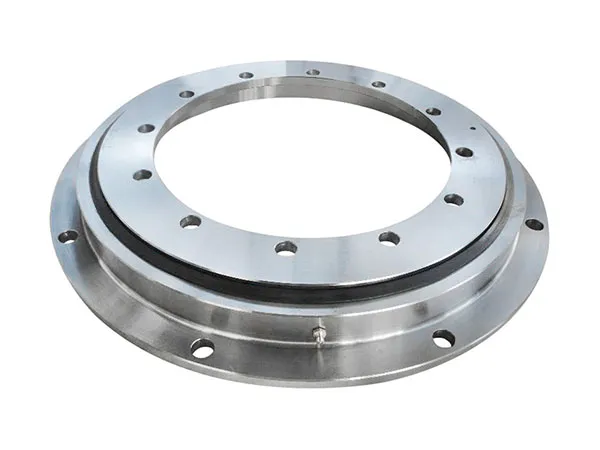
Measure the starting torque and running torque under no-load and light-load conditions. Excessive torque indicates poor raceway finishing or improper internal clearance. Use a torque wrench or a dedicated test rig. For most applications, the running torque should be smooth and consistent without sudden spikes. LYMC performs torque measurement on every bearing to ensure compliance with ISO specifications.
Runout directly affects the alignment of your equipment. Mount the bearing on a test fixture and rotate it slowly while measuring axial and radial displacement with dial indicators. Permissible runout depends on the application; for precision turntables, it may be less than 0.1 mm, while for excavators, up to 0.5 mm can be acceptable. Always compare measured values against the manufacturer’s declared tolerance.
The raceway surface hardness typically ranges from HRC 55–62 for induction-hardened slewing bearings. Use a portable hardness tester on a small area (with manufacturer’s consent) or request a test coupon from the same production batch. The case-hardened depth should be at least 2–3 mm for heavy-load applications. Inadequate hardness leads to rapid wear and plastic deformation.
Internal clearance (radial and axial) significantly impacts load distribution and operational stability. Check the clearance using feeler gauges or a dial indicator while applying a known load. For negative clearance (preloaded) bearings, verify that the preload force stays within design limits. Excessive preload increases friction, while too much clearance causes vibration and noise.
Request a Factory Acceptance Test from your supplier. A reputable manufacturer like LYMC offers FAT protocols that include rotation tests under 100% load, leakage inspection, and mounting bolt torque checks. During FAT, you can physically observe the bearing’s behavior and request measurements of critical parameters. Insist on a test report signed by the quality engineer.
Ultrasonic and magnetic particle inspections can detect subsurface defects and cracks in rings. These tests are especially important for large-diameter bearings that cannot be fully visually inspected. While you may not perform NDE yourself, ask your supplier for documented NDE results on each ring component. LYMC implements 100% NDE on all forged rings.
If possible, perform a simulated load test using a hydraulic press or a dedicated test bench. Apply the maximum moment load expected in your application and measure deflection of the mounting surfaces. Compare deflection with the supplier’s stiffness curve. A bearing that deflects excessively under load may cause misalignment and reduced gear life.
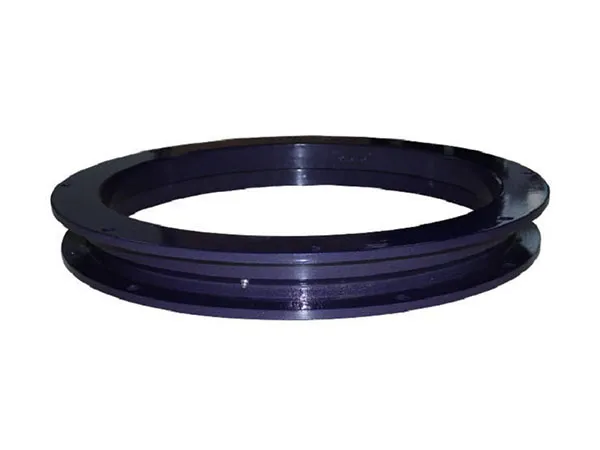
Testing alone is not enough—you need a partner who transparently shares test results and supports custom requirements. LYMC provides detailed test certificates and offers on-site witness testing for high-value orders. When evaluating quotes, consider not only the price but also the comprehensiveness of the test package. A bearing that passes rigorous pre-purchase testing will deliver stable performance for years, reducing total cost of ownership.
In summary, always combine specific performance tests (torque, runout, hardness, clearance) with factory and simulated load checks. Communicate your testing expectations early with the manufacturer. By investing time in pre-purchase testing, you protect your equipment, schedule, and budget.