- +86 13837949030 +86 15890619536
- info@lymcbearings.com export@lymcbearings.com
- Bearing Zone,Luoxin Industrial Cluster, Luoyang City,Henan Province,China

Time:2026-09-28 03:01:23 Source:LYMC Slewing Bearing
Proper lubrication is the lifeblood of any slewing bearing, directly influencing its operational lifespan, load capacity, and overall reliability. Without a well-planned lubrication strategy, even the highest-quality slewing bearing can suffer from premature wear, increased friction, and eventual failure. This article, informed by decades of industry experience from LYMC, outlines the critical best practices for lubricating slewing bearings to ensure long-term reliability in demanding applications such as construction equipment, wind turbines, and material handling systems.
Slewing bearings operate under unique conditions, combining both rotational and oscillating movements while supporting large axial and radial loads. The lubricant must not only reduce friction between rolling elements and raceways but also protect against corrosion, dissipate heat, and seal out contaminants. The two primary lubrication methods are grease lubrication and oil lubrication. Grease is the most common choice due to its simplicity, reduced leakage, and ability to act as a seal. Oil lubrication, while offering better cooling and high-speed performance, is typically reserved for specialized high-speed or extreme-temperature environments.
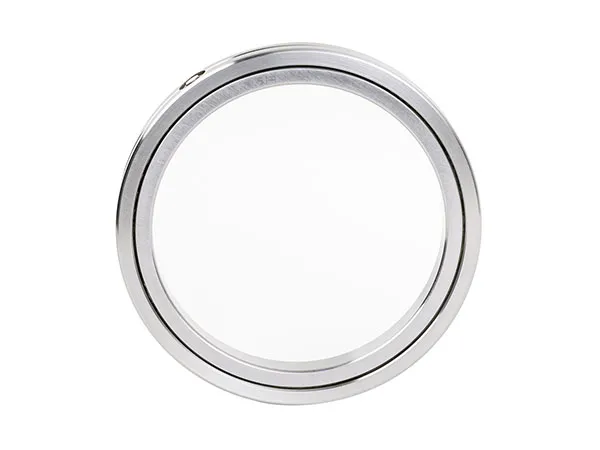
Choosing the correct lubricant is a critical decision that depends on operating conditions, load spectrum, ambient temperature, and rotational speed. LYMC recommends evaluating three key parameters:
The base oil viscosity must be sufficient to maintain an elastohydrodynamic (EHD) film under load. For most slewing bearing applications, an ISO VG 220 to 680 grade grease is typical. Higher loads and slower speeds call for higher viscosity. Synthetic base oils (e.g., PAO, silicone) offer better thermal stability and longer life in extreme temperatures.
Lithium complex thickeners are widely used due to their good mechanical stability and water resistance. Polyurea greases excel in high-temperature and high-speed applications. Aluminum complex thickeners provide excellent water resistance for outdoor or marine environments.
Look for greases containing extreme pressure (EP) additives, such as molybdenum disulfide or graphite, for heavily loaded bearings. Anti-wear (AW) additives and rust inhibitors are essential for long-term reliability. Always verify that additives are compatible with seal materials.
Even the perfect lubricant will fail if applied incorrectly or too infrequently. The following practices are derived from LYMC's field experience and industry standards.
During assembly, the bearing cavity should be filled to approximately 25-30% of its free volume for new bearings. Overfilling can cause churning, overheating, and seal damage. Use a manual or pneumatic grease gun fitted with a pressure-relief valve to avoid over-pressurization.
Relubrication frequency depends on duty cycle, environment, and bearing size. A general rule: relubricate every 100 operating hours for moderate-duty applications, or every 50 hours for severe conditions (high loads, dust, moisture). For wind turbine main bearings, intervals may extend to 6–12 months when using specialized long-life greases. Monitor grease purging from seals as a visual indicator of adequate replenishment.
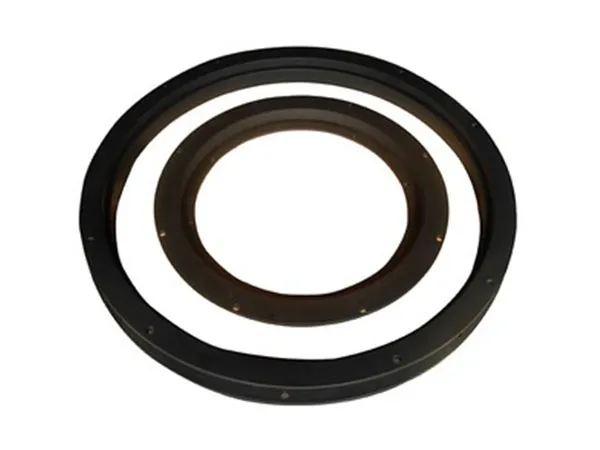
Proactive monitoring can detect lubrication degradation before it leads to failure. Integrate these practices into your maintenance program:
Check for grease discoloration (darkening indicates oxidation), water contamination (milky or frothy appearance), or hardening. Feel for changes in consistency. Unusual vibration or noise during operation may signal inadequate lubrication or bearing wear.
For systems using oil lubrication, regular sampling and analysis can identify contamination (water, particles), viscosity changes, and additive depletion. Trend analysis helps predict optimal oil change intervals.
A sudden rise in bearing operating temperature often indicates lubrication failure or overloading. Install thermocouples or infrared sensors and compare readings against baseline data. An increase of more than 20°C above ambient may require immediate investigation.
Implementing these best practices ensures that your slewing bearing delivers its designed service life with minimal downtime. LYMC, as a trusted manufacturer of high-quality slewing bearings, provides detailed lubrication guidelines tailored to specific bearing models and applications. By selecting the correct lubricant, adhering to proper application techniques, and monitoring condition, you protect your investment and maximize operational reliability. For additional support, consult LYMC's technical documentation or contact our engineering team for a customized lubrication plan.