- +86 13837949030 +86 15890619536
- info@lymcbearings.com
- Bearing Zone,Luoxin Industrial Cluster, Luoyang City,Henan Province,China

Time:2026-05-19 07:12:25 Source:LYMC Slewing Bearing
High-speed precision robots have become the backbone of modern manufacturing, from semiconductor production to automated assembly lines. These systems demand not only accuracy and repeatability but also long-term stability under dynamic loads. One critical component that directly influences performance is the slewing bearing. Choosing the right slewing bearing is not a simple catalog selection; it requires a deep understanding of operating conditions, design constraints, and long-term reliability expectations.
This guide explains how engineers and procurement teams can select slewing bearings that match the demanding requirements of high-speed precision robots while ensuring durability and cost efficiency.
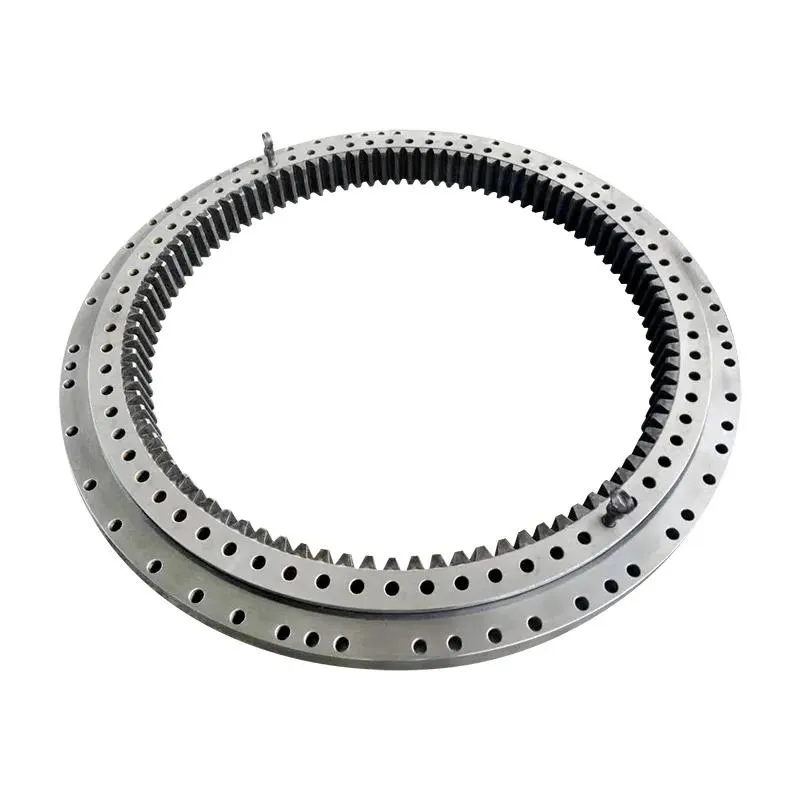
Slewing bearings are large-diameter rotational components designed to handle axial, radial, and moment loads simultaneously. In high-speed robots, they often serve as the core rotational interface in joints such as the base axis, wrist modules, or rotary positioning tables.
Unlike traditional bearings, slewing bearings must maintain smooth motion under complex load combinations while minimizing vibration and backlash. In precision robotics, even a slight deviation can lead to positioning errors, reduced product quality, and increased maintenance costs.
1. Rotational Speed and Dynamic Performance
High-speed robots operate under significantly higher rotational speeds compared to traditional heavy equipment. Not all slewing bearings are designed for such conditions.
You should evaluate:
Maximum allowable rotational speed
Friction torque characteristics
Heat generation under continuous operation
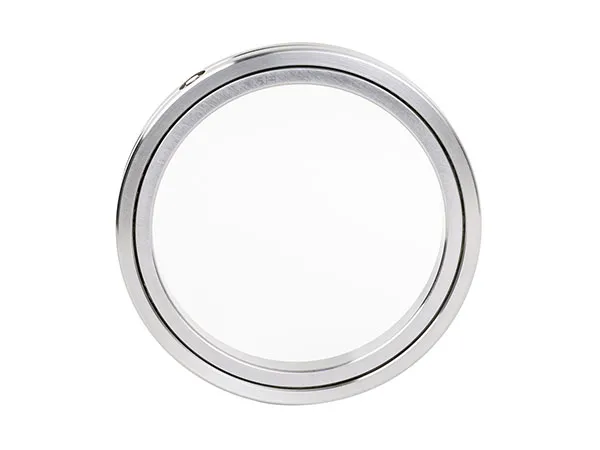
Bearings with optimized raceway geometry and precision rolling elements can reduce friction and improve thermal stability. Cross-roller slewing bearings are often preferred for high-speed precision applications due to their ability to maintain rigidity and accuracy.
2. Load Capacity and Load Type
Every robotic application has a unique load profile. Engineers must calculate:
Axial loads (vertical forces)
Radial loads (horizontal forces)
Tilting moment loads (caused by offset forces)
High-speed robots often experience fluctuating loads during acceleration and deceleration. Therefore, it is not enough to consider static load ratings; dynamic load capacity and fatigue life must also be evaluated.
A well-selected slewing bearing should provide a safety margin while avoiding overdesign, which can increase weight and reduce efficiency.
3. Precision and Clearance Control
Precision robots require extremely tight tolerances. The slewing bearing must support:
Minimal axial and radial runout
Controlled internal clearance or preload
Low backlash
Preloaded slewing bearings are commonly used in precision robotics to eliminate play and enhance positioning accuracy. However, improper preload selection can increase friction and reduce bearing life. A balance between stiffness and smooth rotation is essential.
4. Material and Heat Treatment
Material selection plays a crucial role in both performance and durability. High-speed applications generate more heat and stress, which requires:
High-strength alloy steels
Advanced heat treatment processes such as induction hardening or carburizing
Surface finishing for reduced wear
5. Lubrication System Design
Lubrication is often overlooked during selection, yet it directly affects bearing life and performance.
For high-speed precision robots:
Low-viscosity lubricants may reduce friction
Automatic lubrication systems can ensure consistent performance
Sealing design must prevent contamination without increasing drag
A well-designed lubrication system reduces maintenance intervals and prevents premature failure.
6. Weight Optimization and Structural Integration
In robotics, weight matters. Excessive bearing weight increases inertia, which reduces acceleration efficiency and increases energy consumption.
Engineers should consider:
Lightweight design options
Integration with robot structure
Compact bearing profiles
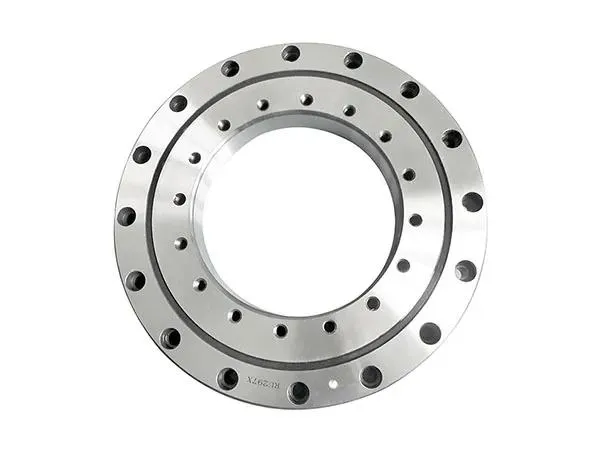
Thin-section slewing bearings or customized designs can help achieve a better balance between strength and weight.
7. Environmental Conditions
Operating environments significantly influence bearing selection. High-speed robots may operate in:
Cleanrooms (semiconductor industry)
Dusty or abrasive environments
High or variable temperatures
Sealing systems, corrosion-resistant coatings, and specialized materials should be selected based on environmental exposure. For example, stainless steel or coated bearings are suitable for clean or corrosive environments.
8. Manufacturer Expertise and Quality Assurance
Not all slewing bearing suppliers are equal. Choosing a reliable manufacturer is as important as choosing the bearing itself.
You should evaluate:
Engineering support and customization capability
Quality certifications (ISO, etc.)
Testing and inspection processes
Case studies in robotics applications
A manufacturer with proven experience in high-speed precision systems can provide valuable design insights and reduce project risks.
Many companies make critical errors when selecting slewing bearings for robotics:
Choosing based only on price rather than performance
Ignoring dynamic load calculations
Overlooking lubrication requirements
Failing to consider thermal expansion and heat dissipation
Using standard bearings without customization
Avoiding these mistakes can significantly improve system reliability and reduce lifecycle costs.
A structured approach helps ensure optimal selection:
Define application requirements (speed, load, accuracy)
Calculate load cases and duty cycles
Select bearing type (cross roller, ball, etc.)
Determine precision class and preload
Evaluate lubrication and sealing solutions
Verify with manufacturer data and simulations
Conduct prototype testing if necessary
This process ensures that the selected bearing aligns with both performance and operational goals.
As robotics technology evolves, slewing bearings are also advancing. Key trends include:
Integration of smart sensors for condition monitoring
Use of advanced materials to reduce weight and increase durability
Improved manufacturing precision for ultra-high accuracy applications
Customization for collaborative robots (cobots) and AI-driven systems
Companies that adopt these innovations early can gain a competitive advantage in automation markets.
Choosing the right slewing bearing for high-speed precision robots requires a combination of engineering analysis, practical experience, and supplier collaboration. Every decision, from load calculation to lubrication design, affects the robot’s performance, accuracy, and service life.
A well-selected slewing bearing not only ensures smooth and precise motion but also reduces downtime and maintenance costs. For companies aiming to build high-performance robotic systems, investing time in proper bearing selection is not optional—it is a strategic necessity.
If your project involves demanding robotic applications, working with an experienced slewing bearing manufacturer can help you achieve optimal results and long-term reliability.