- +86 13837949030 +86 15890619536
- info@lymcbearings.com
- Bearing Zone,Luoxin Industrial Cluster, Luoyang City,Henan Province,China

Time:2026-03-11 03:06:47 Source:LYMC Slewing Bearing
In the trailer manufacturing and maintenance industry, the turntable bearing plays a pivotal role in ensuring smooth operation, durability, and safety. Whether you are managing a heavy-duty flatbed trailer, a mobile crane platform, or a specialized utility trailer, the choice between single-row and double-row ball turntable bearings can significantly affect performance, maintenance requirements, and overall lifespan. Understanding the functional differences, advantages, and limitations of each type is crucial for making an informed decision.

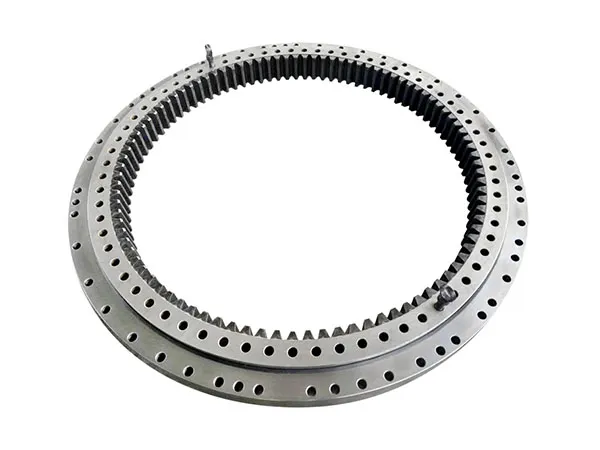
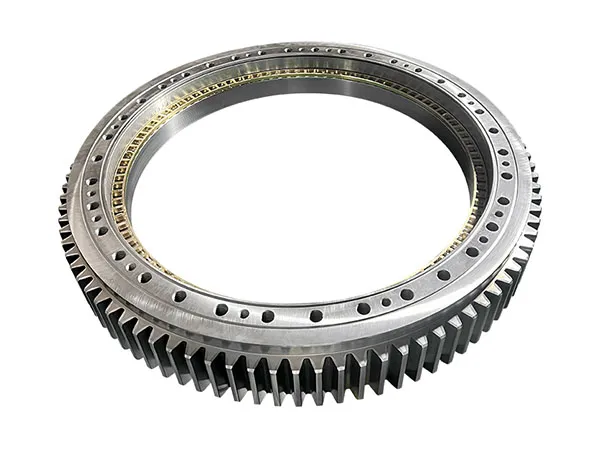
Turntable bearings, also known as slewing bearings in industrial contexts, are mechanical components designed to facilitate rotation between two structural parts. In trailers, these bearings are installed at the pivot point where the trailer body rotates relative to the chassis or towing mechanism. By distributing radial, axial, and moment loads efficiently, turntable bearings reduce friction and wear, ensuring the trailer can maneuver safely under heavy loads.
Ball-type turntable bearings, in particular, are widely used in trailers due to their excellent rotational smoothness and load-handling characteristics. Unlike roller bearings, ball bearings allow for precise movement with minimal friction, which is essential for applications where frequent steering adjustments or rotation is required.
Single-Row Ball Turntable Bearings
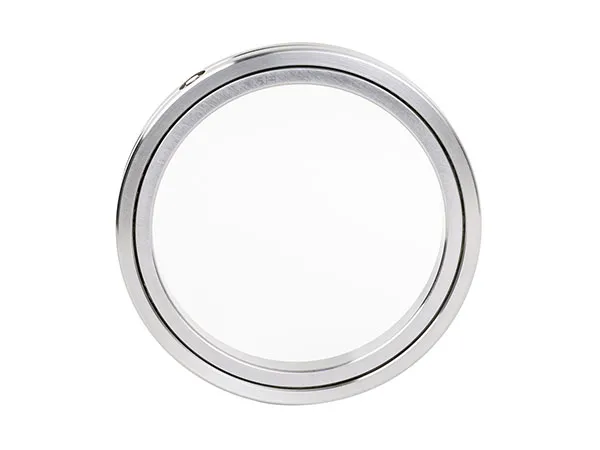
Single-row ball turntable bearings are designed with a single line of balls between the inner and outer rings. This configuration provides several advantages:
Compact Design: Single-row bearings are generally smaller and lighter, making them ideal for trailers where space constraints and weight reduction are priorities.
Cost-Effective: Due to simpler construction and fewer components, single-row bearings are usually more economical to produce and replace.
Sufficient for Moderate Loads: For trailers carrying standard loads, single-row bearings can handle both axial and radial forces effectively, providing reliable performance in everyday applications.
However, single-row bearings have limitations. Their load capacity is lower than double-row bearings, particularly for applications involving high moment loads or uneven weight distribution. Over time, excessive loading can lead to accelerated wear and potential misalignment, which may affect steering precision and safety.
Double-Row Ball Turntable Bearings
Double-row ball bearings feature two lines of balls, effectively increasing their load-carrying capacity without significantly enlarging the bearing diameter. This design brings several advantages:
Higher Load Capacity: The dual-row configuration allows double-row bearings to support heavier trailers or those carrying unevenly distributed loads.
Better Moment Resistance: Double-row bearings are more capable of resisting tilting moments, which is particularly important for specialized trailers such as those used in construction, military, or industrial transport.
Extended Lifespan: With a larger contact surface and more evenly distributed load, double-row bearings experience less stress per ball, reducing wear and maintenance frequency.
On the downside, double-row bearings are typically heavier and more expensive than single-row counterparts. They may also require slightly more complex installation and alignment procedures, especially in compact trailer designs.

Selecting the right bearing depends on multiple factors, including the trailer’s intended use, load characteristics, and operating environment:
Load Requirements: If your trailer regularly carries heavy or uneven loads, a double-row bearing will provide greater durability and stability. For lighter, standard-duty trailers, single-row bearings are often sufficient.
Trailer Size and Design: Compact or lightweight trailers benefit from the reduced size and weight of single-row bearings, whereas larger trailers can accommodate double-row bearings without significant design trade-offs.
Maintenance and Replacement: Single-row bearings are easier to replace and maintain, making them suitable for applications where downtime must be minimized. Double-row bearings, while more durable, may require specialized tools or alignment expertise.
Cost Considerations: Initial investment and long-term maintenance costs should both be considered. While double-row bearings cost more upfront, their extended service life can offset initial expenses in heavy-duty applications.
Understanding the differences between single-row and double-row ball trailer turntable bearings is essential for manufacturers, fleet operators, and maintenance professionals. Single-row bearings offer a lightweight, cost-effective solution for moderate load applications, while double-row bearings provide superior load capacity, moment resistance, and longevity for demanding environments.
By carefully evaluating the trailer’s load requirements, design constraints, and maintenance considerations, operators can make informed decisions that optimize performance, reduce wear, and ensure safety on the road. Whether you are upgrading an existing trailer or designing a new model, selecting the appropriate turntable bearing can be the difference between smooth, reliable operation and costly repairs or downtime.
Investing time in understanding these components today can result in significant operational benefits and long-term savings, making the choice between single-row and double-row ball turntable bearings a critical decision in trailer performance optimization.