- +86 13837949030 +86 15890619536
- info@lymcbearings.com
- Bearing Zone,Luoxin Industrial Cluster, Luoyang City,Henan Province,China

Time:2026-04-14 01:45:15 Source:LYMC Slewing Bearing
In the demanding world of forestry, harvester heads are exposed to some of the harshest operational conditions. These machines must cut, delimb, and process trees efficiently, often in environments that are uneven, wet, and filled with debris. While the mechanical design and power of modern harvesters have advanced considerably, one critical component often determines their reliability and longevity: the bearing.
Standard bearings, commonly used in many industrial applications, frequently fail when deployed in forestry machinery. Understanding why this happens is essential for forestry operators, equipment manufacturers, and maintenance teams looking to minimize downtime and reduce operational costs.
The Harsh Environment of Forestry Operations
Forestry operations impose unique stresses on machinery components. Unlike controlled industrial environments, forest terrain presents constant shock loads, vibration, and impact forces. Harvester heads, in particular, experience sudden impacts when cutting through dense logs or dealing with irregularly shaped tree trunks. Standard bearings, which are typically designed for uniform loads and moderate operational stress, often cannot withstand these conditions. Over time, this mismatch between bearing capacity and operational demand leads to premature failure.
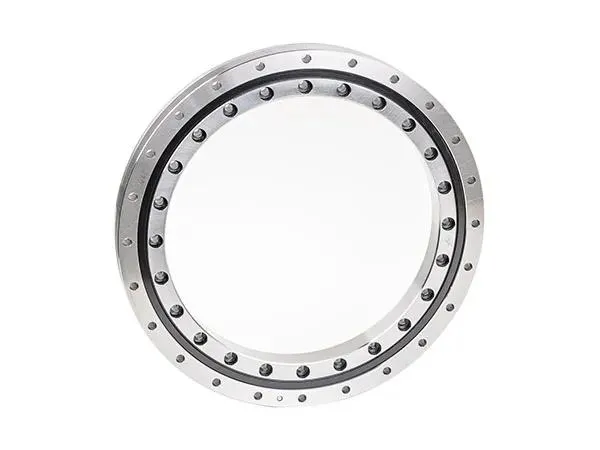
There are several mechanisms through which standard bearings fail in forestry applications:
Impact Damage: When a harvester head strikes a hard object, such as a knot in a log or a hidden rock, the sudden load can deform or crack the bearing raceways. Standard bearings lack the reinforced structures needed to absorb these instantaneous shocks.
Contamination: Forest environments are rife with dirt, sawdust, moisture, and small debris. Even with seals in place, particles can infiltrate standard bearings, causing abrasive wear and reducing the lifespan of the component.
Fatigue: Repeated cyclic loading from normal cutting and delimbing operations can initiate fatigue cracks in bearing materials. Bearings not engineered for heavy impact resistance accumulate micro-damage faster, ultimately leading to spalling or complete failure.
Misalignment and Vibration: Harvester heads are mounted on articulated arms, which move dynamically and are prone to misalignment. Standard bearings that do not accommodate angular misalignment are subjected to uneven stress, accelerating wear and deformation.
To address these challenges, forestry equipment manufacturers and operators increasingly turn to impact-resistant bearings specifically designed for harvester heads. These bearings offer several advantages:
Enhanced Material Properties: Impact-resistant bearings are often made from higher-grade steel alloys with superior toughness. This allows them to absorb shocks without cracking or deforming.
Optimized Internal Geometry: Reinforced raceways, thicker rolling elements, and carefully calculated clearances help these bearings handle both radial and axial impacts more effectively.
Improved Sealing Solutions: Advanced seals prevent ingress of dust, wood chips, and moisture, which are ubiquitous in forestry operations, thereby reducing abrasive wear and corrosion.
Extended Service Life: By accommodating misalignment and vibration, impact-resistant bearings distribute loads more evenly, reducing fatigue failure and extending operational lifespan.
A forestry company in Northern Europe recently retrofitted several harvester heads with impact-resistant bearings. The results were significant:
Reduced Downtime: Bearings lasted over 50% longer than standard bearings, minimizing unscheduled maintenance and increasing productivity.
Lower Maintenance Costs: Fewer bearing replacements translated into significant cost savings over multiple harvesting cycles.
Enhanced Operational Safety: Bearings that can withstand unexpected impacts reduce the risk of catastrophic component failure, protecting both operators and machinery.
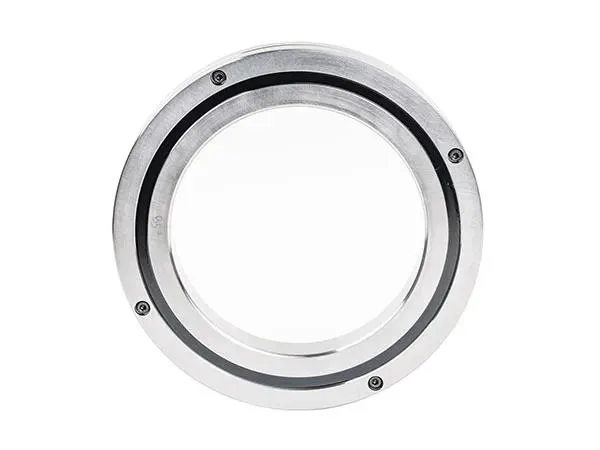
Selecting the proper bearing requires a deep understanding of the operational environment and load conditions. Key considerations include:
Load Capacity: Bearings must support both the weight of the harvester head and the dynamic impact loads during cutting.
Impact Resistance: Look for bearings tested for high shock loads and made from tough, fatigue-resistant materials.
Sealing and Lubrication: Bearings should feature robust seals and suitable lubrication to cope with debris, moisture, and temperature variations.
Compatibility: Ensure the bearing design aligns with the geometry and motion characteristics of the harvester head, including angular misalignment and axial movement.
The demanding conditions of forestry operations make standard bearings an unreliable choice for harvester heads. Failure to account for high-impact loads, contamination, and misalignment can lead to frequent breakdowns, high maintenance costs, and reduced productivity. Investing in impact-resistant bearings is not merely a technical upgrade—it is a strategic decision that enhances equipment reliability, extends operational lifespan, and improves overall efficiency.
By understanding why standard bearings fail in forestry and prioritizing impact resistance in harvester heads, forestry operations can achieve both performance and cost efficiency. Manufacturers and operators who adopt this approach gain a tangible competitive advantage, ensuring their machinery operates smoothly even in the most challenging environments.