- +86 13837949030 +86 15890619536
- info@lymcbearings.com
- Bearing Zone,Luoxin Industrial Cluster, Luoyang City,Henan Province,China

Time:2026-11-02 03:01:45 Source:LYMC Slewing Bearing
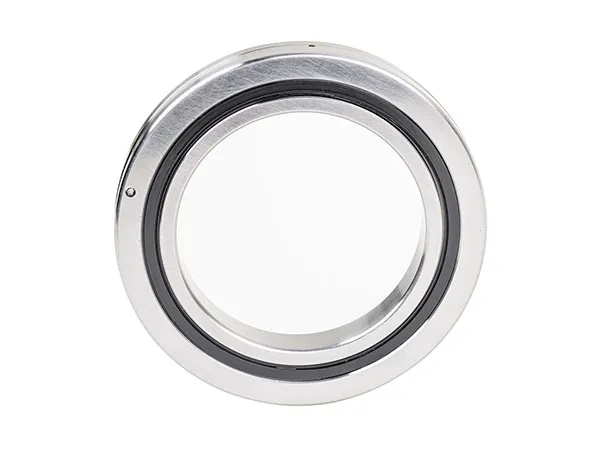
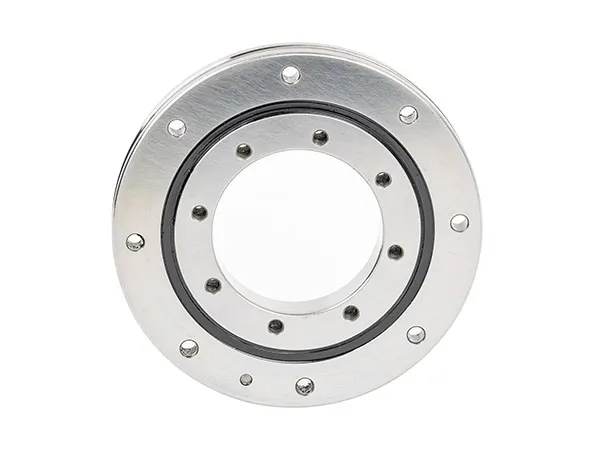
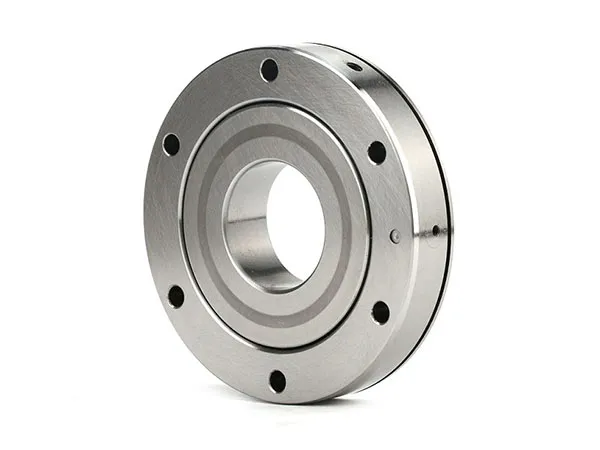
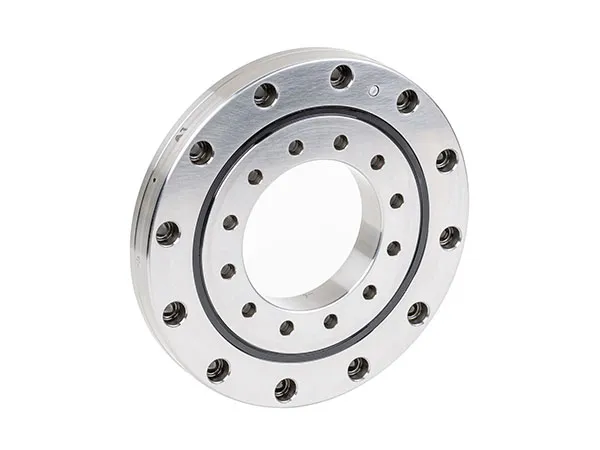
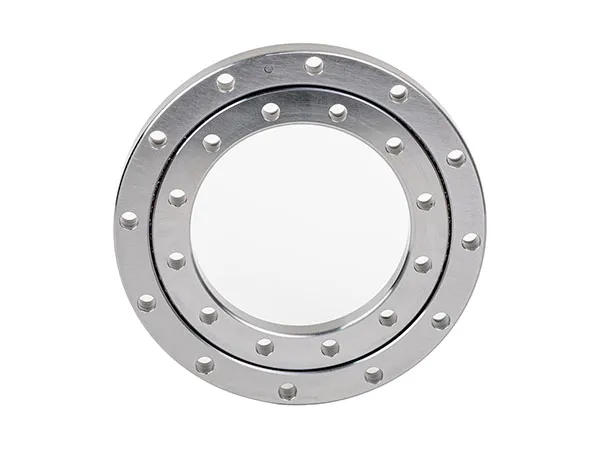
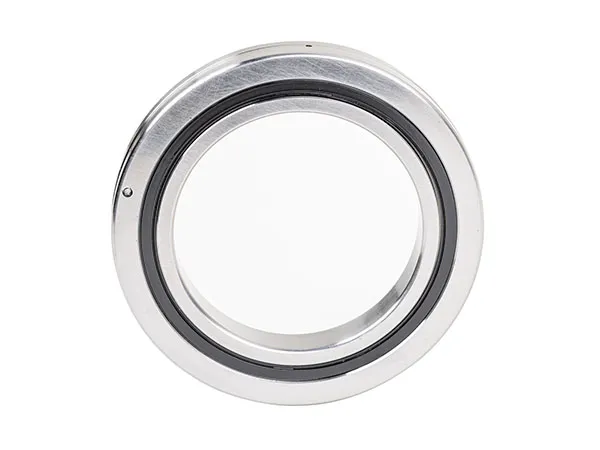
Choosing between a crossed roller bearing and a tapered roller bearing usually comes down to how a machine must carry load, how much space the joint can spare, and how precisely the rotating element must be positioned. The two designs look similar on a drawing — both use rollers rather than balls — yet they distribute force in fundamentally different ways. A crossed roller bearing places cylindrical rollers at 90 degrees to one another in a single raceway, so one compact ring set resists radial load, axial load, and tilting moment at the same time. A tapered roller bearing uses conical rollers on conical raceways, giving it excellent combined radial and thrust capacity, but it usually requires careful pairing and adjustment to control moment and internal clearance. This article compares them on the criteria that decide real designs.
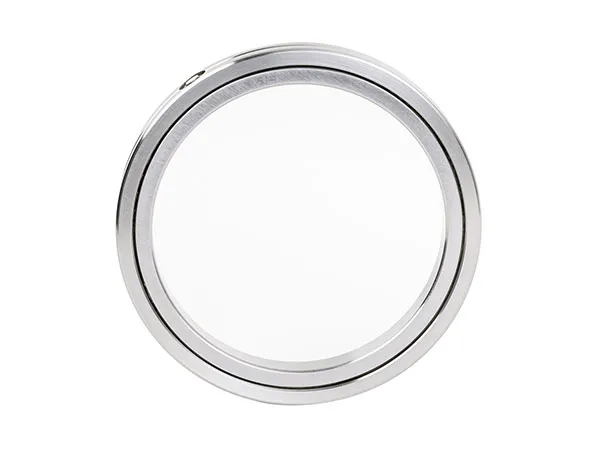
In a crossed roller bearing, cylindrical rollers alternate in orientation along a single raceway groove — one roller axis vertical, the next horizontal, and so on around the ring. Because the roller axes cross, roughly half the rollers resist load in one direction and half in the perpendicular direction. The practical result is that a single bearing set can absorb radial load, axial load in both directions, and tilting moment simultaneously.
This geometry also means the bearing has a very small axial height relative to its diameter. Designers use it where a thin, stiff, highly accurate rotary joint is needed: machine tool indexing tables, robot arm joints, precision reducers, rotary encoders, and medical or optical positioning stages.
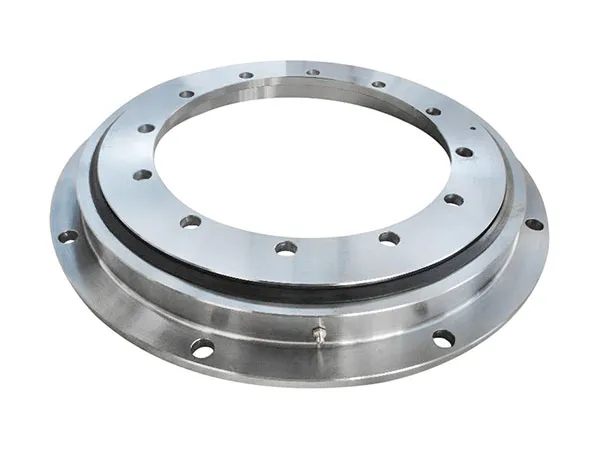
A tapered roller bearing uses conical rollers running on conical raceways. The projected contact lines of roller and raceway converge at a common point on the bearing axis, which produces true rolling motion along the contact and allows the bearing to carry heavy combined radial and axial loads.
A single-row tapered bearing accepts axial load in one direction only. To handle reversing thrust or tilting moment, two or more rows are mounted in opposition — back-to-back, face-to-face, or in a tandem set — and the assembly is adjusted with shims, spacers, or locknuts. Tapered bearings dominate in gearboxes, wheel hubs, axle pinions, mill stands, and heavy-duty spindles where radial load and stiffness matter more than compactness.
Radial load capacity per unit of width is generally high in both designs, but they diverge sharply once moment and multi-directional load enter the picture.
| Criteria | Crossed roller | Tapered roller |
|---|---|---|
| Radial load | Good | Very high |
| Axial load (both directions) | Good, in one bearing | High, but needs opposed rows |
| Tilting moment | Excellent in a thin section | Requires wide axial spacing |
| Tilting stiffness per height | Very high | Lower unless spread apart |
| Typical speed limit | Moderate | Higher |
| Mounting complexity | Simple in count, demanding in flatness | More parts, adjustable preload |
Where a machine needs a stiff rotary axis in a short stack height, the crossed roller design wins. Where the load is predominantly radial with heavy thrust and the axial length is available, tapered rollers usually deliver more capacity per unit of cost.
Tapered roller bearings generally tolerate higher rotational speeds than crossed roller bearings of comparable size. The tapered geometry ends in a sliding contact between the roller large end and the guide rib, which generates friction but also keeps the rollers properly seated. Lubrication carries that heat away, and oil circulation or oil-air lubrication is common in high-speed tapered applications.
Crossed roller bearings rely on alternate roller orientation, which limits how fast the cage can travel and how much preload can be applied without excessive drag. They are typically preloaded to eliminate clearance, so friction torque is present from the first revolution. Most crossed roller applications run at low to moderate speed with grease for life, or with oil for continuous-duty indexing tables.
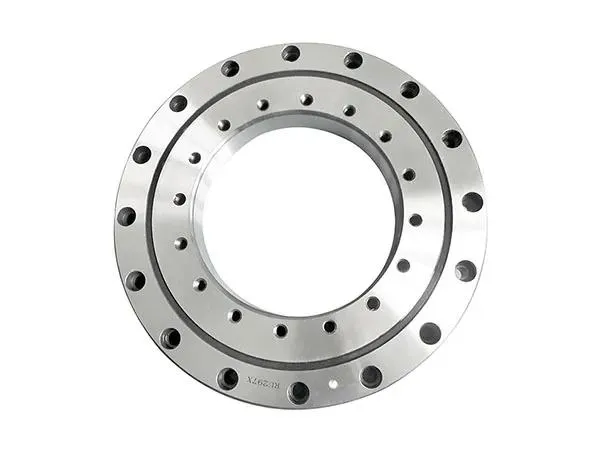
Crossed roller bearings offer high rotational accuracy with near-zero clearance in a single, thin ring set. Because one bearing handles all load directions, the housing and shaft can be short and simple, and runout is controlled by a single precision-ground component. The trade-off is that the mounting surfaces must be flat and rigid; a soft or distorted housing transfers that distortion straight into the raceway.
Tapered roller bearings are separable, which makes assembly and inspection straightforward, and their clearance or preload can be set after mounting. Achieving high tilting stiffness, however, requires two bearings separated by a meaningful axial distance, so the shaft and housing grow longer. For engineers working inside a fixed envelope, that geometric penalty often decides the question before load calculations begin.
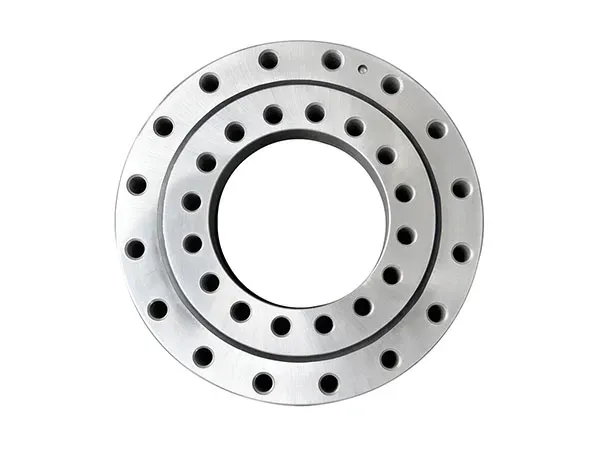
Start with the load case, not the catalog. If radial load dominates and thrust acts in one direction, a single-row tapered bearing plus a locating bearing is efficient and inexpensive. If the joint must resist moment — an indexing table cantilevered over its support, for example — the crossed roller design removes an entire bearing position and its associated runout stack-up.
Then check speed. Above roughly the point where friction torque and lubricant film thickness become limiting, tapered rollers retain their capacity advantage, while crossed rollers may need derating or additional cooling. Finally, examine the envelope: a shorter bearing span always reduces tilting stiffness for tapered pairs, so measure the available axial length honestly before committing.
Sometimes, but not directly. A substituted pair must be sized, spaced, and preloaded to match the moment stiffness and runout of the original single unit, which often requires a longer housing or larger bearings than the design allows.
Alternate roller orientation and the preload needed to achieve zero clearance increase friction torque and heat generation, so continuous speed is generally restricted compared with tapered rollers of similar size.
For tilting rigidity in a short axial space, crossed roller bearings are the stronger choice. For pure radial rigidity with generous axial length, a properly preloaded tapered pair is highly effective and often more economical.
Most precision grades are supplied with controlled preload or near-zero clearance, because the design's advantage depends on eliminating internal play. Clearance values should be confirmed with the supplier for each application.
Both bearing types are mature, well-understood solutions, and the correct answer is dictated by load direction, stiffness targets, speed, and the space you actually have. LYMC works with design engineers to match crossed roller and tapered roller bearings to specific load cases, mounting configurations, and accuracy requirements, so the selected bearing performs as intended through the life of the machine.