- +86 13837949030 +86 15890619536
- info@lymcbearings.com export@lymcbearings.com
- Bearing Zone,Luoxin Industrial Cluster, Luoyang City,Henan Province,China

Time:2025-12-18 06:42:57 Source:LYMC Slewing Bearing
In modern industrial equipment, slewing bearings are core components for achieving rotary motion, widely used in cranes, wind turbines, steel structure rotary tables, and tunnel boring machines. They can withstand not only large radial loads but also axial forces and overturning moments, directly affecting the safety and efficiency of the equipment. This article will systematically analyze the classification and selection points of slewing bearings to assist in engineering practice.
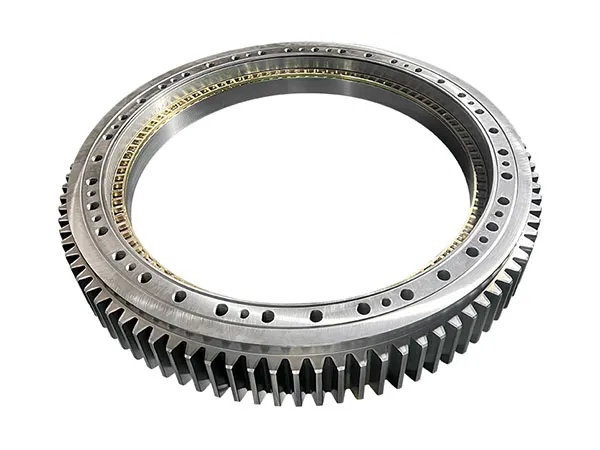
Slewing bearings can be classified according to the type of rolling elements, structural form, and installation method. Different types of bearings are suitable for different engineering needs and load conditions.
Spherical Slewing Bearings: Use steel balls as rolling elements, resulting in low frictional resistance and flexible operation, suitable for light to medium load scenarios.
Typical Applications: Industrial robots, light lifting machinery, etc.
Roller Slewing Bearings: Use cylindrical rollers, tapered rollers, or crossed rollers, offering high load-bearing capacity, particularly suitable for bearing radial forces and overturning moments.
Typical Applications: Tower cranes, tunnel boring machines, steel structure rotary tables.
Single-row slewing bearings: Compact structure, moderate load-bearing capacity, suitable for small and medium-sized machinery.
Double-row slewing bearings: Rolling elements are arranged in two rows, increasing load-bearing capacity, suitable for medium and large-sized machinery.
Four-point contact slewing bearings: A single row of steel balls can withstand both positive and negative axial loads and radial forces, widely used in engineering machinery.
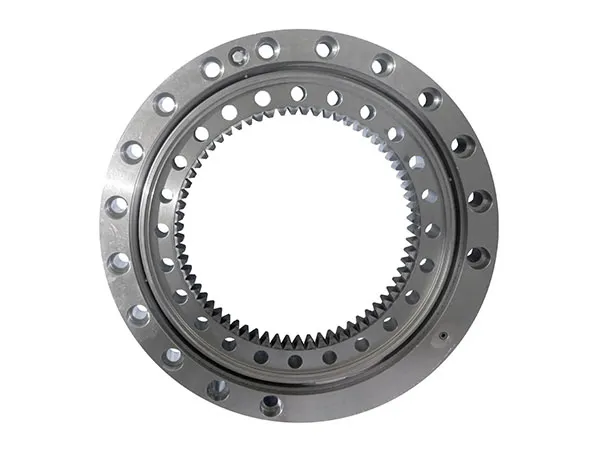
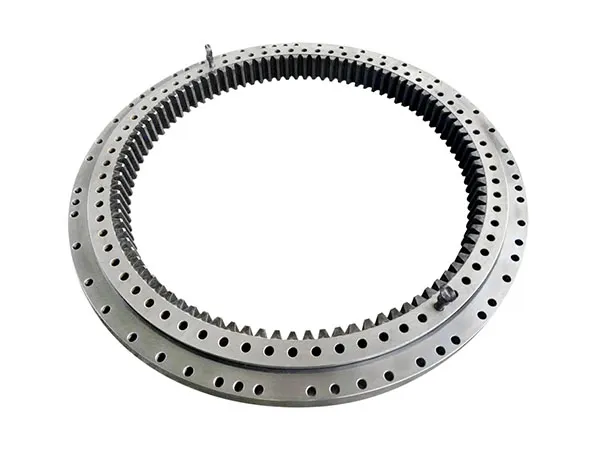
Internal gear slewing bearings: Gear ring is on the inner ring, commonly used in turntables, rotary worktables, etc.
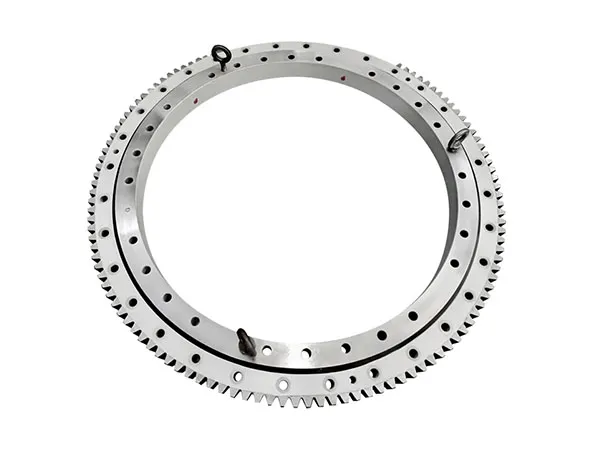
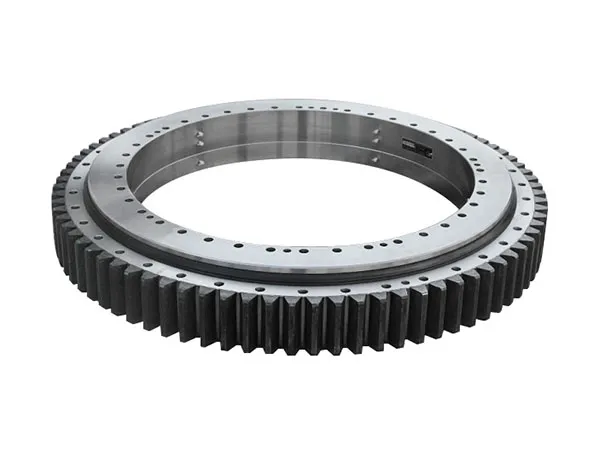
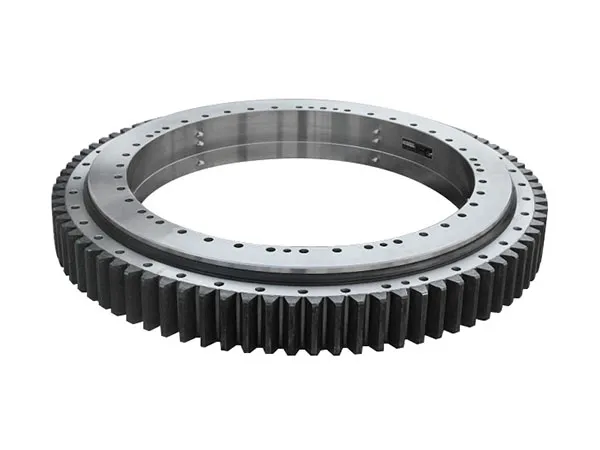
External gear slewing bearings: Gear ring is on the outer ring, suitable for gear-driven equipment.
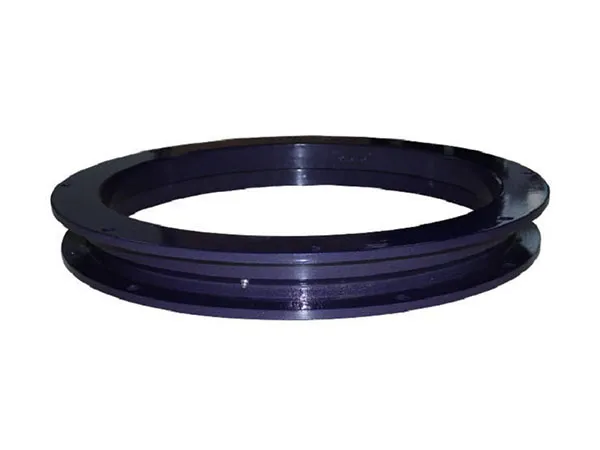
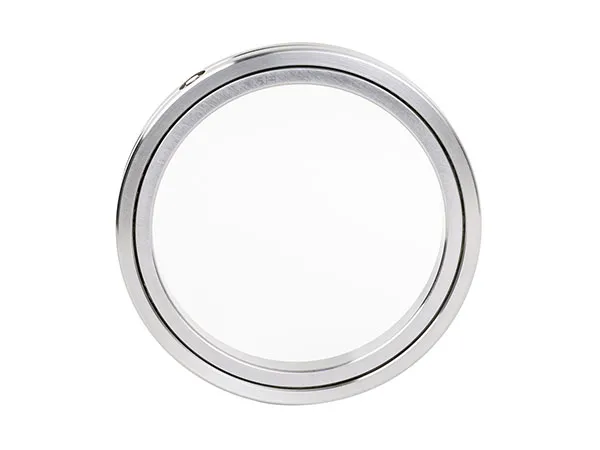
Gearless slewing bearings: Rotation is achieved through hydraulic or direct drive, mostly used in high-precision machinery.
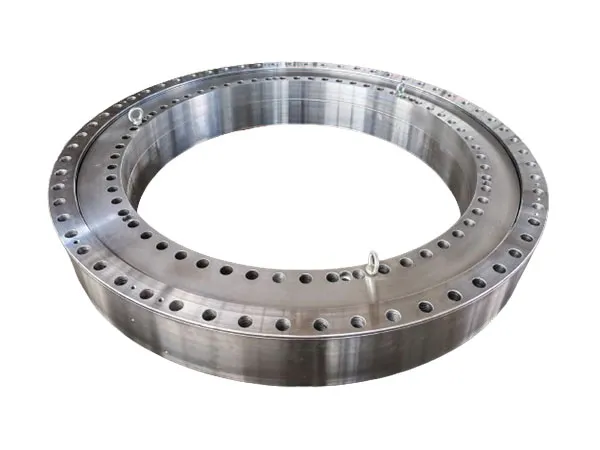
Choosing the right slewing bearing not only ensures stable equipment operation but also reduces maintenance costs and extends service life. The following factors should be considered when selecting slewing bearings:
Small, light-load equipment can use ball bearings.
Medium-to-large equipment with high load-bearing requirements should use roller bearings or crossed roller bearings.
Low-speed or intermittently operating equipment can use conventional bearings.
High-speed or high-precision positioning equipment requires bearings with low friction and high precision.
Dry indoor environments: Conventional lubrication is sufficient.
Harsh environments such as high temperature, dust, and humidity: Select bearings with good sealing performance and corrosion-resistant materials.
Outer diameter, inner diameter, thickness, and gear ring type must match the equipment structure to ensure convenient installation and even stress distribution.
For continuously operating or heavily loaded equipment, high-quality bearings should be selected. Regular lubrication and maintenance can significantly extend the service life.
Scientific selection of slewing bearings is key to ensuring the efficient and stable operation of industrial equipment. Different types of bearings have their own advantages. When selecting bearings, factors such as load, speed, precision, and environmental conditions should be considered, along with proper installation and regular maintenance.
For customized bearing solutions tailored to your equipment, it is recommended to contact a professional supplier to ensure stable, safe, and efficient equipment operation.