- +86 13837949030 +86 15890619536
- info@lymcbearings.com export@lymcbearings.com
- Bearing Zone,Luoxin Industrial Cluster, Luoyang City,Henan Province,China

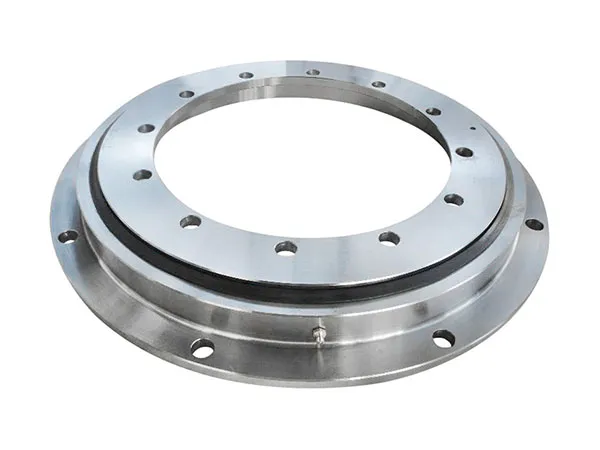
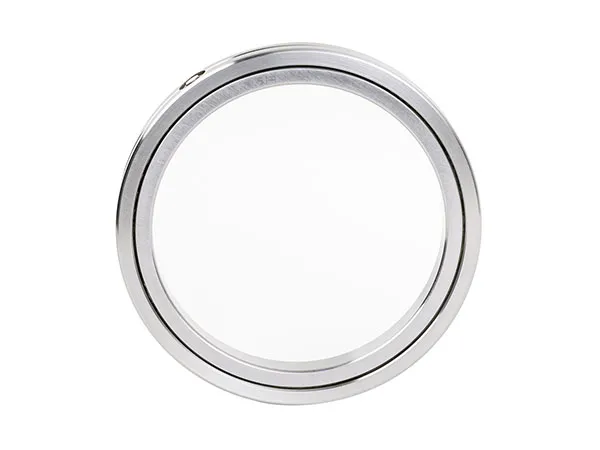
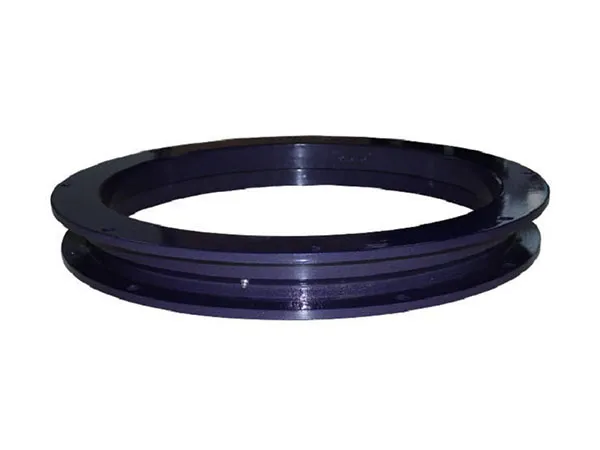
Crossed roller bearings are high-precision, high-rigidity rolling bearings. Their unique feature is that the rolling elements - cylindrical rollers - are arranged crosswise in 90° V-grooves between the inner and outer rings. This design allows a single bearing to simultaneously withstand complex loads in all directions, including radial force, axial force, and overturning moment.
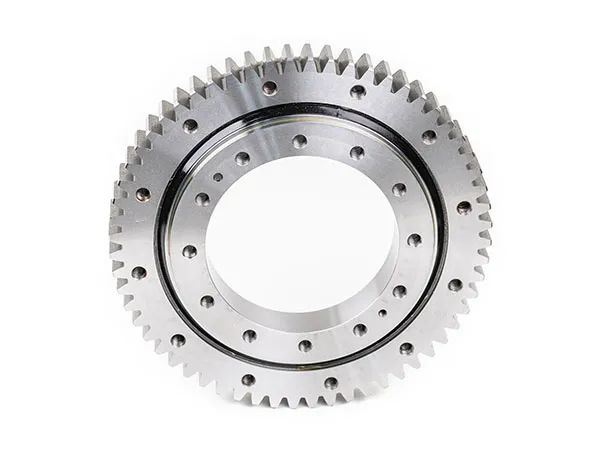
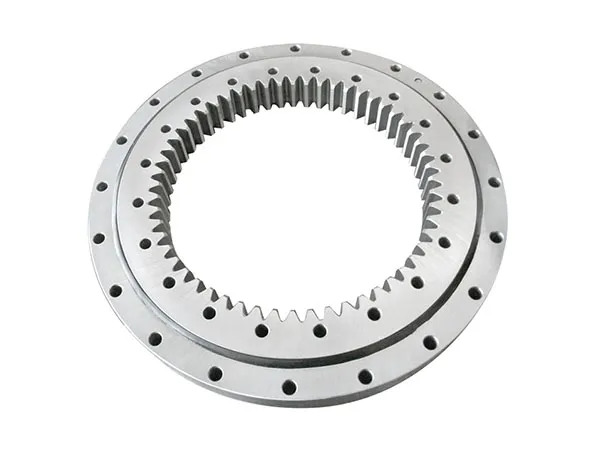
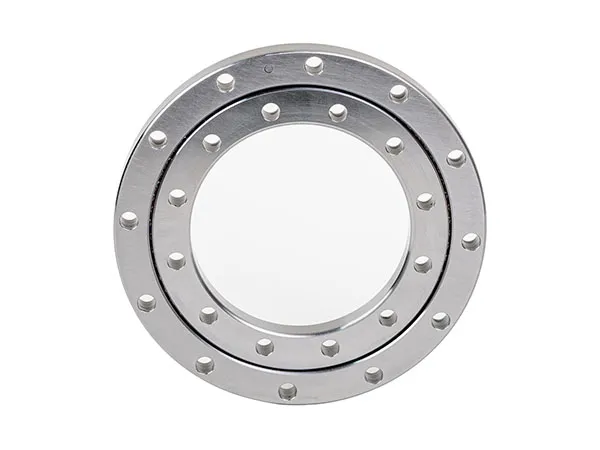
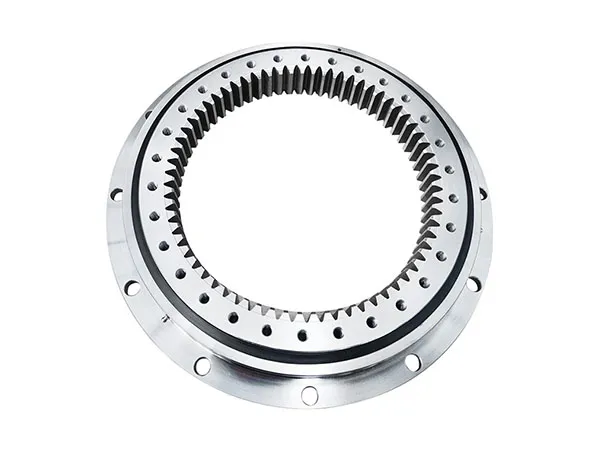
These are the main components that provide the structural integrity and the primary load-bearing capacity of the bearing. The rings have mounting holes for easy installation and can be either toothed or smooth.
Lubricants (grease or oil) are crucial for reducing friction and wear between the rolling elements and raceways. Some slewing bearings come pre-lubricated, while others require periodic lubrication maintenance.
Structure: Composed of cylindrical rollers arranged orthogonally to each other, Crossed Roller Rings can support loads in multiple directions (radial, axial, and moment loads).
Load Distribution: The load is distributed evenly across the rollers, enhancing rigidity and load capacity.
Precision: The orthogonal arrangement of rollers minimizes rotational deflection and ensures smooth and precise motion.
Low Friction: Reduced contact surface between rollers and raceways lowers friction and allows for precise movement.
Space-saving: Crossed Roller Rings offer a compact design that combines high rigidity and load capacity, making them suitable for applications where space is limited.
Integrated Design: Many Crossed Roller Rings come as integrated units with inner and outer rings, simplifying installation.
Preloaded Models: Some models are preloaded, eliminating the need for adjustments during installation.
Various Sizes and Configurations: Available in a range of sizes and configurations to meet different application needs.
Material Options: Can be made from various materials, including stainless steel for corrosion resistance or other alloys for specific applications.
hermal Stability: Maintains performance over a wide range of temperatures, ensuring reliability in diverse environments.
Vibration Resistance: Designed to minimize vibrations, contributing to the stability of the entire system.
A cross roller bearing is a precision bearing designed with cylindrical rollers arranged alternately at 90-degree angles between the inner ring and outer ring. This structure allows a single bearing to simultaneously support radial loads, axial loads, and overturning moments.
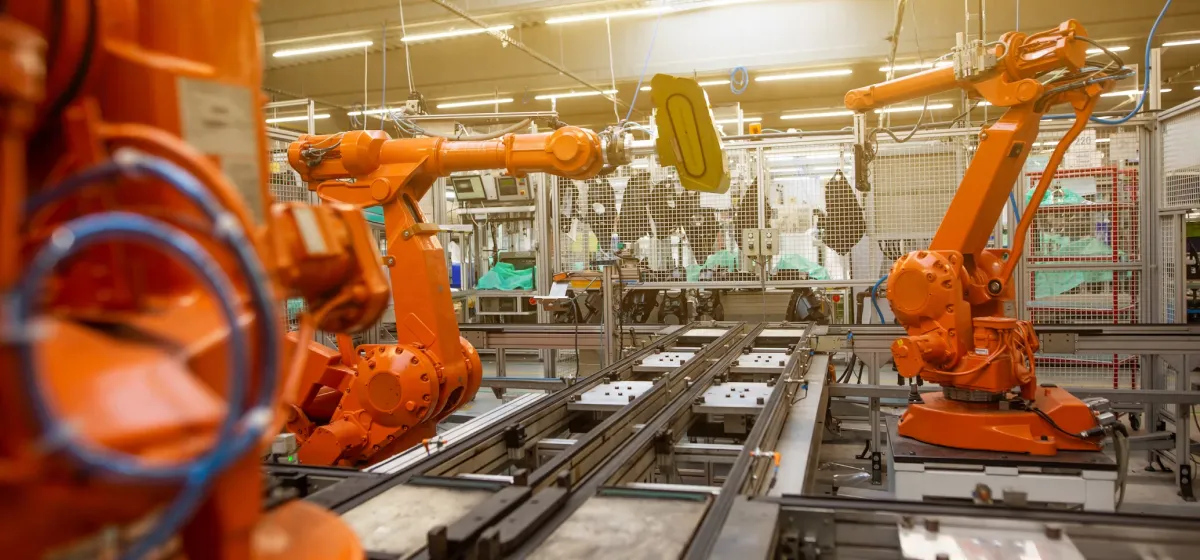
Manufacturers widely use cross roller bearings in robotics, rotary tables, medical systems, semiconductor equipment, and precision automation machinery because they provide high rigidity and compact installation dimensions.
Cross roller bearings offer several important advantages for precision mechanical systems:
High rotational accuracy
Excellent rigidity under combined loads
Compact and lightweight structure
Stable operation at low or high speeds
Reduced elastic deformation
Simplified machine design with a single-bearing solution
These advantages help improve positioning accuracy and overall machine reliability.
Cross roller bearings are commonly used in:
Industrial robots
CNC rotary tables
Semiconductor wafer handling equipment
Medical imaging systems
Precision measuring instruments
Optical inspection devices
Automation equipment
Aerospace positioning systems
Engineers often choose cross roller bearings for applications that require both compact design and high motion accuracy.
A cross roller bearing works by arranging cylindrical rollers in alternating perpendicular directions. This configuration distributes loads evenly across the raceway surfaces and allows the bearing to carry complex loads from multiple directions simultaneously.
Compared with conventional ball bearings, cross roller bearings provide higher rigidity and reduced rotational deflection.
Deep groove ball bearings mainly support radial loads and moderate axial loads. Cross roller bearings, however, are specifically designed for precision systems that experience combined loads and overturning moments.
Cross roller bearings also offer:
Higher rigidity
Better rotational accuracy
Lower elastic deformation
Improved positioning precision
For high-precision rotary motion systems, cross roller bearings often provide better overall performance.
Yes. Many robotic systems rely on cross roller bearings because robotic joints require compact structures, high stiffness, and accurate rotational movement.
Cross roller bearings help robotic arms achieve:
Smooth motion control
Stable repeatability
Reduced vibration
Higher positioning precision
Collaborative robots and industrial robotic arms frequently use thin-section cross roller bearings in joint assemblies.
Manufacturers typically produce cross roller bearings using high-carbon chromium bearing steel for excellent hardness and fatigue resistance.
Depending on the operating environment, manufacturers may also provide:
Stainless steel cross roller bearings
Hybrid ceramic cross roller bearings
Vacuum-compatible bearings
Corrosion-resistant coated bearings
Material selection depends on temperature, cleanliness requirements, corrosion exposure, and operating speed.
Users should evaluate several factors before selecting a cross roller bearing:
Load type and magnitude
Rotational speed
Required rigidity
Installation space
Accuracy grade
Operating temperature
Lubrication conditions
Environmental cleanliness
A proper bearing selection helps extend service life and improve equipment stability.
Several factors can reduce bearing service life:
Improper installation
Insufficient lubrication
Excessive preload
Contamination from dust or particles
Misalignment
Overloading
Incorrect mounting surface accuracy
Regular maintenance and proper installation procedures help prevent early bearing damage.
Yes. Many bearing manufacturers offer customized solutions based on customer requirements.
Custom options may include:
Non-standard dimensions
Special preload designs
Stainless steel materials
Ceramic rolling elements
Special sealing structures
High-temperature lubrication
Corrosion-resistant coatings
Customized bearings are common in medical, aerospace, semiconductor, and robotics applications.