- +86 13837949030 +86 15890619536
- info@lymcbearings.com
- Bearing Zone,Luoxin Industrial Cluster, Luoyang City,Henan Province,China

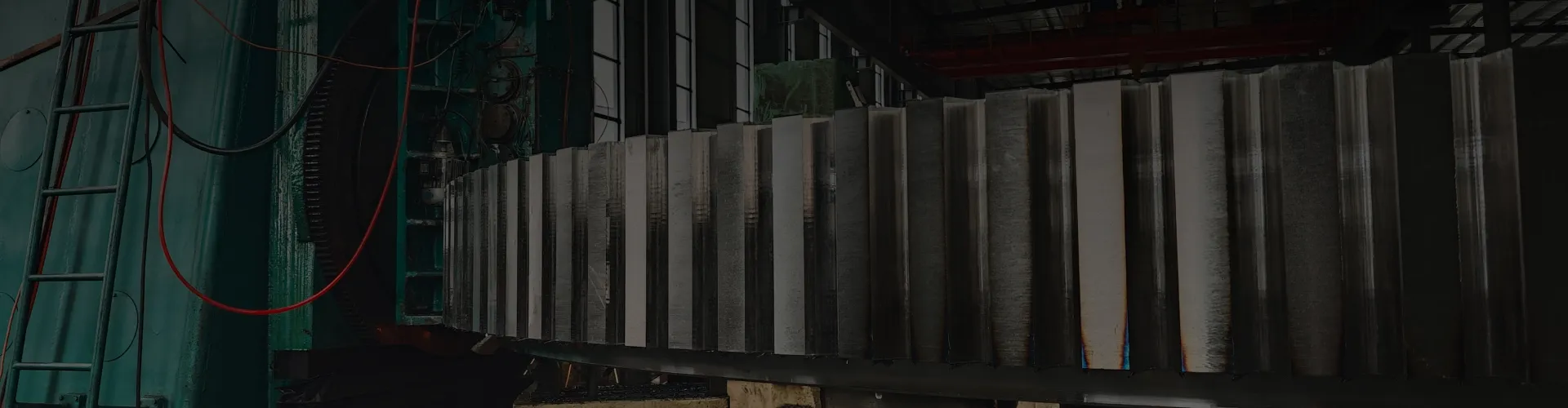
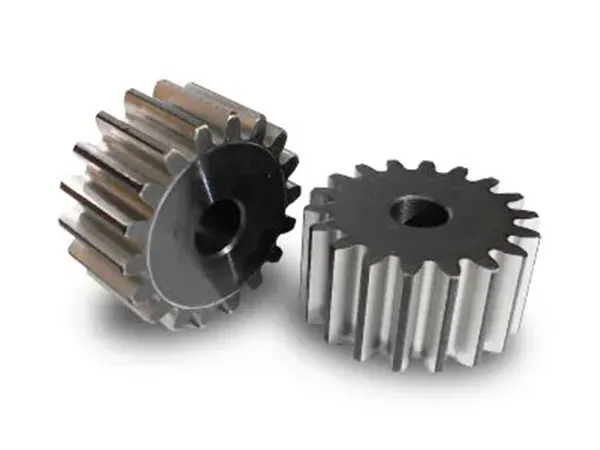
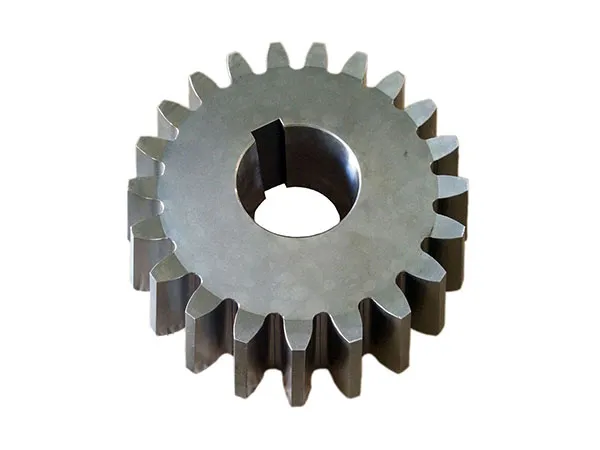
The working principle of gears can be traced back to the principle of levers. When two or more gears are meshed together, they form a "gear transmission" or "gear train." When one gear (the driving gear) rotates, its teeth push the teeth of another gear (the driven gear) that is meshed with it, causing the driven gear to rotate as well.
When gears are used in conjunction with racks, they can convert rotational motion into linear motion (such as the rack and pinion mechanism in a car's steering system).
Normally, two directly meshing gears rotate in opposite directions. If it is necessary to maintain the same direction of rotation, an intermediate gear (idler gear) can be introduced.
Depending on the gear ratio (tooth number ratio), gears can amplify or reduce torque.
Gears transmit the rotational motion of one shaft to another through the continuous meshing of teeth
The gear transmission meshes stably, is not prone to slippage, and works reliably.
Under normal use and maintenance, the gears have a long life and a low failure rate.
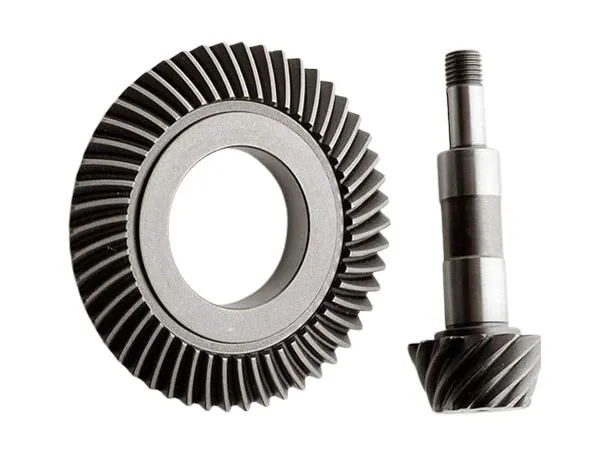
Depending on the gear type, power transmission between parallel axes (such as spur gears, helical gears), intersecting axes (such as bevel gears) and staggered axes (such as worm gears) can be achieved to adapt to various complex mechanical layouts.
Through different gear combinations (such as gearboxes), multi-speed changes can be achieved to meet the speed and torque requirements under different working conditions.
Through external or internal meshing gears, the rotation direction of the output shaft can be changed.
Gears are made of strong materials (usually alloy steel) and are precisely processed and heat treated to enable them to withstand large loads and torques, making them suitable for heavy loads and high power applications.
Gear transmission usually has a high transmission efficiency, generally up to 95% or more, and energy loss is very small, especially when lubricated well. This makes it perform well in situations where efficient power transmission is required (such as automobile gearboxes and wind turbines).
Gear transmission transmits motion through the precise meshing of teeth, so it can achieve a very accurate and constant transmission ratio. This is especially important in precision machinery (such as clocks and machine tools) where speed and position need to be strictly controlled.
The transmission ratio can be precisely designed and adjusted by changing the ratio of the number of teeth of the large and small gears.
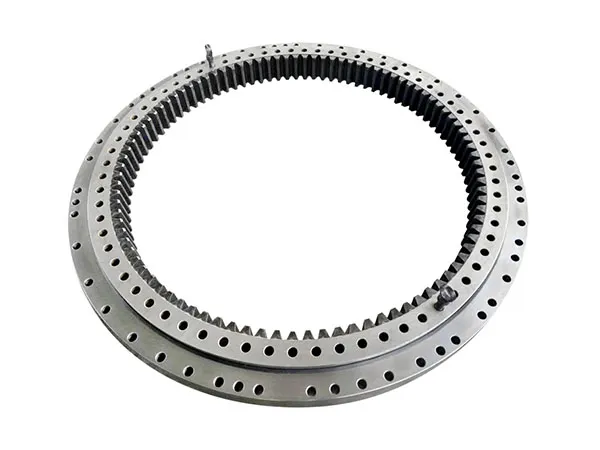
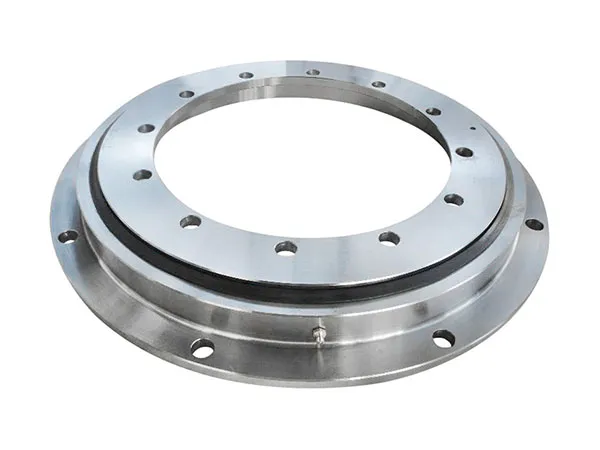
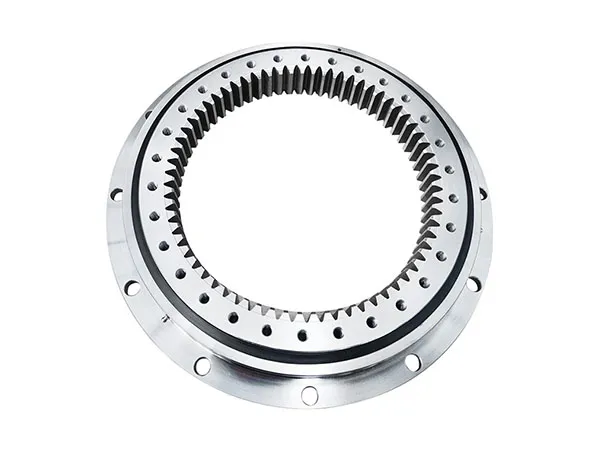
A slewing bearing gear is the integrated gear structure machined on the inner ring or outer ring of a slewing bearing. The gear works together with a pinion drive system to transmit torque and control rotational movement in heavy-duty equipment.
Manufacturers commonly use slewing bearing gears in cranes, excavators, wind turbines, aerial work platforms, port machinery, and industrial rotating systems.
Slewing bearing gears are generally divided into three main categories:
External gear slewing bearings
Internal gear slewing bearings
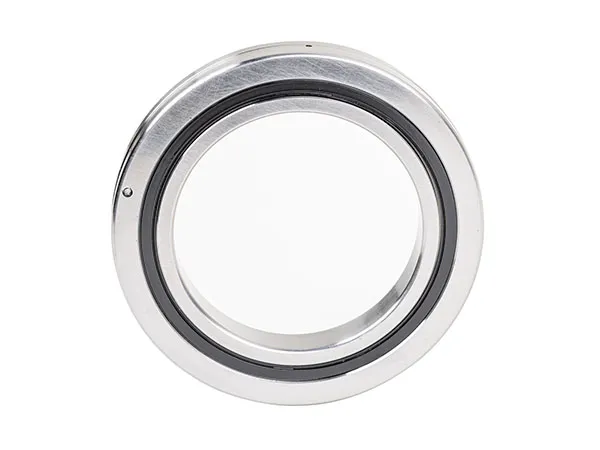
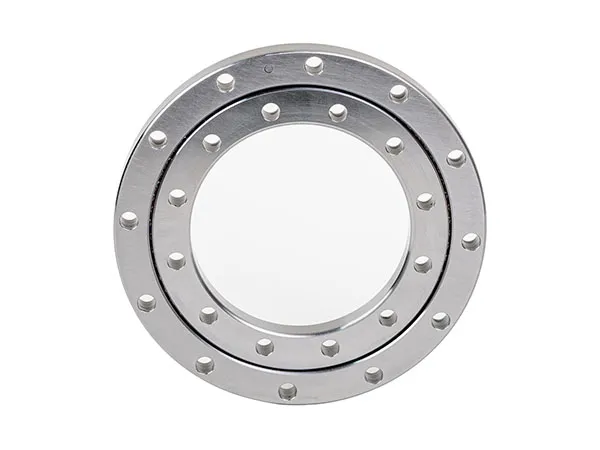
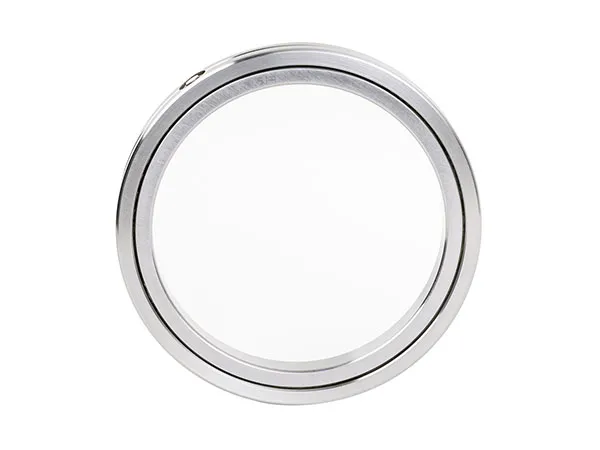
Gearless slewing bearings
External gear designs simplify installation and maintenance, while internal gear structures provide better protection against contamination and external impact.
Most slewing bearing gears use high-strength alloy steel or carbon steel materials. Manufacturers often apply heat treatment processes such as:
Quenching
Tempering
Induction hardening
These treatments improve tooth hardness, wear resistance, and fatigue life under heavy-load conditions.
Users should evaluate several operating factors before selecting a slewing bearing gear:
Axial load capacity
Radial load requirements
Tilting moment load
Rotational speed
Gear module
Tooth profile accuracy
Operating environment
Engineers should also consider lubrication conditions, installation space, and long-term maintenance requirements.
Internal gear slewing bearings place the gear teeth inside the bearing ring, which helps protect the gear from dust and mechanical damage.
External gear slewing bearings position the teeth on the outside diameter, allowing easier inspection, lubrication, and gear meshing adjustment.
The final selection depends on equipment layout and transmission design requirements.
Gear hardening significantly improves tooth surface durability. Hardened gear teeth resist:
Surface wear
Pitting damage
Fatigue cracking
Plastic deformation
Heavy-duty machinery operating under shock loads especially benefits from hardened slewing bearing gears.
Lubrication intervals depend on operating conditions, rotational speed, load intensity, and environmental contamination levels.
For heavy industrial applications, technicians typically inspect grease conditions regularly and relubricate according to equipment maintenance schedules.
Insufficient lubrication may lead to abnormal wear, increased noise, and shortened gear life.
Slewing bearing gears allow large equipment to rotate smoothly while supporting combined axial, radial, and moment loads.
Without a properly designed slewing gear system, heavy machinery cannot achieve stable rotational movement or reliable positioning accuracy under demanding working conditions.
Technicians usually inspect:
Tooth surface condition
Backlash changes
Lubrication quality
Surface pitting
Crack formation
Abnormal tooth contact patterns
Routine inspections help identify potential issues before severe mechanical damage occurs.
Yes, manufacturers can produce slewing bearing gears for high-temperature applications by using:
Heat-resistant materials
Specialized lubrication systems
Enhanced sealing structures
Customized heat treatment processes
These solutions help maintain stable operation in demanding industrial environments.