- +86 13837949030 +86 15890619536
- info@lymcbearings.com
- Bearing Zone,Luoxin Industrial Cluster, Luoyang City,Henan Province,China

Time:2026-08-31 03:01:22 Source:LYMC Slewing Bearing
In heavy-duty rotating equipment, the slewing bearing is a critical component that must withstand extreme loads, harsh environments, and continuous operation. One of the most common failure modes—contamination ingress—can drastically shorten bearing life, leading to costly downtime and repairs. Selecting the right sealing solution is not merely a detail; it is a strategic decision that determines the reliability and longevity of your entire machine. This article examines the fundamental approaches to slewing bearing sealing, compares the strengths and limitations of each type, and highlights how LYMC’s engineered sealing systems provide superior contaminant exclusion for demanding applications.
Slewing bearings operate in some of the most unforgiving environments on earth: mining excavators, offshore cranes, wind turbines, and construction equipment. Abrasive particles like sand, dust, and metallic debris can enter the bearing raceways, causing three-body abrasion that accelerates wear. Moisture and chemicals lead to corrosion and lubricant degradation. Statistics from bearing manufacturers indicate that over 80% of premature bearing failures are contamination-related. A robust sealing solution acts as the first line of defense, preserving lubricant cleanliness, reducing friction, and extending maintenance intervals. For mission-critical applications, investing in an advanced seal system delivers immediate returns through higher uptime and lower total cost of ownership.
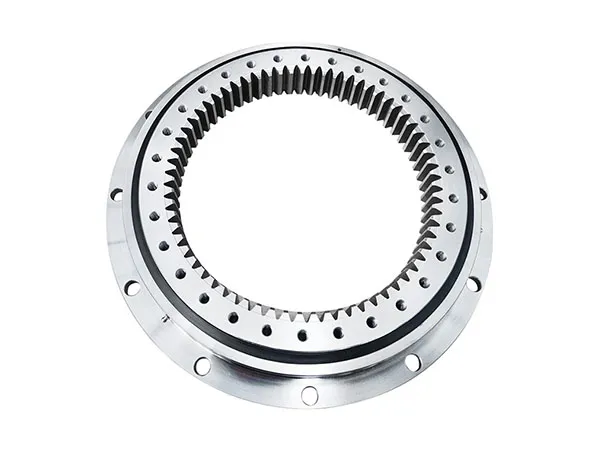
There is no one-size-fits-all seal. The optimal choice depends on operating conditions, speed, pressure, and the type of contaminants present. Below is a structured comparison of the three main families of sealing solutions.
Contact seals maintain continuous physical contact with the rotating race, creating a tight barrier. Materials such as polyurethane, nitrile rubber, or PTFE are commonly used. These seals excel in static or low-speed applications where positive sealing is paramount. The main advantage is their excellent contaminant exclusion capability, especially against fine dust and liquid splash. However, friction and heat generation can be a concern at higher speeds. LYMC’s contact seal designs incorporate optimized lip profiles and low-friction compounds to minimize torque while maintaining sealing integrity.
Non-contact seals rely on a tortuous path or tight clearance to block particles without physical contact. They are frictionless, making them ideal for high-speed applications or where heat buildup must be avoided. Common configurations include axial and radial labyrinth designs, sometimes combined with grease-filled chambers that trap contaminants. The primary trade-off is that non-contact seals cannot completely stop very fine or airborne particles—they are better suited for environments with larger debris or moderate contamination levels. When specifying a non-contact seal, consider the labyrinth geometry; LYMC offers multi-stage labyrinth systems that significantly increase the effective sealing path.
For the most severe conditions, a hybrid seal merges the benefits of contact and non-contact technologies. A typical hybrid arrangement uses a primary contact lip seal for immediate particle blocking, followed by a labyrinth or secondary wiper to handle any bypass. This dual-stage approach provides redundancy and enhanced reliability. Hybrid seals are the standard choice for offshore, mining, and other heavy industries where contamination risks are highest. LYMC has developed a proprietary hybrid seal family that integrates a spring-energized PTFE lip with a multi-chamber labyrinth, offering the lowest leakage rates in the market.
After evaluating many off-the-shelf sealing products, many engineers turn to LYMC for custom-engineered solutions that outperform standard options. Below are the key advantages that set LYMC apart.
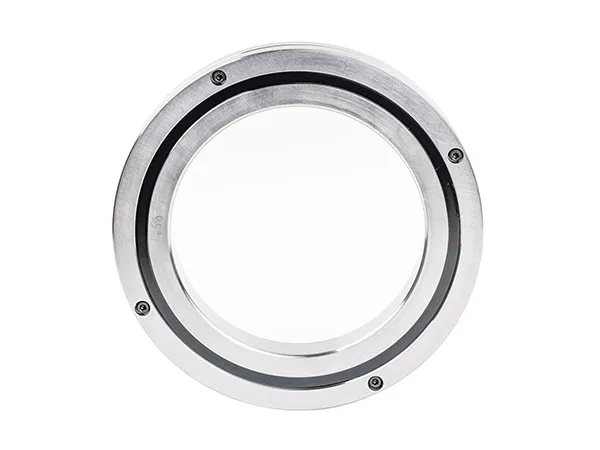
Selecting the correct seal involves analyzing several factors. Use the following criteria as a checklist when discussing your requirements with LYMC engineers:
Making the right choice early in the design phase prevents expensive field failures. Partnering with a specialist like LYMC ensures that your sealing system is not merely a catalog part, but a tailor-made solution that aligns with your operational goals.
The slewing bearing is often the most expensive and difficult-to-replace component in a rotating assembly. By prioritizing a proper sealing solution, you protect that investment. Whether you need a simple lip seal for an indoor unloader or a multi-stage hybrid system for an offshore platform, LYMC provides the engineering expertise and proven products to keep contaminants out and keep your equipment running. Evaluate your current seal performance—if contamination failures are occurring, a seal upgrade is likely the most cost-effective corrective action you can take.