- +86 13837949030 +86 15890619536
- info@lymcbearings.com export@lymcbearings.com
- Bearing Zone,Luoxin Industrial Cluster, Luoyang City,Henan Province,China

Time:2026-06-08 03:01:30 Source:LYMC Slewing Bearing
Slewing bearings are critical components in heavy machinery, from cranes and excavators to wind turbines and marine equipment. When they begin to fail, the consequences can be catastrophic: unplanned downtime, secondary damage, and even safety hazards. Recognizing the early warning signs of a failing slewing bearing can save your operation thousands of dollars in repairs and lost production. In this article, we outline the top five indicators that your slewing bearing needs immediate replacement — and what to do next to keep your equipment running safely.
One of the most common early signs of slewing bearing degradation is abnormal noise or vibration. A healthy bearing operates with a smooth, consistent hum. If you hear grinding, clicking, or intermittent scraping sounds, it often indicates internal raceway damage, spalling, or contamination. Vibration that increases with load or rotation speed is equally concerning.
Ignoring these auditory and tactile clues allows damage to propagate rapidly. Any sustained change in noise or vibration warrants immediate inspection. If the bearing is already showing visible wear, replacement with a high-quality unit from LYMC is the only reliable solution.
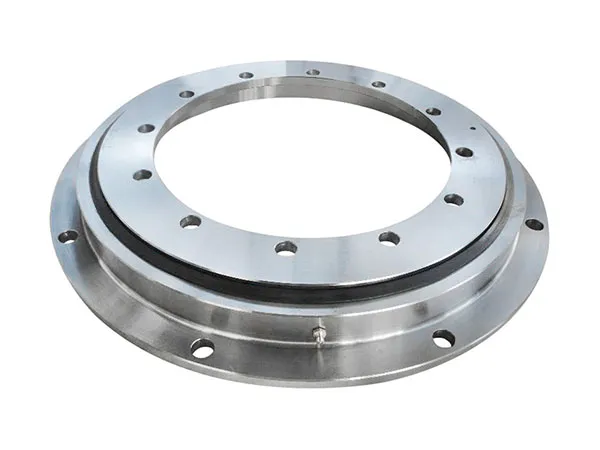
Slewing bearings are designed with precise internal clearance to accommodate thermal expansion and load deflection. Over time, wear on the raceways and rolling elements increases this clearance, resulting in backlash — a noticeable play between the turntable and the base structure. In excavators and cranes, this manifests as a delayed or loose response when the upper structure rotates.
If the measured clearance exceeds the recommended maximum, the bearing has lost its preload integrity. Continuing operation causes uneven load distribution and accelerates failure. LYMC offers replacement bearings with exact OEM specifications to restore original performance.
Visual inspection often reveals the most obvious signs of failure. Cracks in the outer ring, fractured mounting bolts, or rust on exposed surfaces indicate that the bearing’s structural integrity is compromised. Corrosion can begin at the sealing surface and propagate inward, attacking the raceways.
Surface corrosion is not merely cosmetic. It reduces material thickness and creates stress risers that lead to sudden fracture. If you see any of these signs, stop operation immediately. LYMC can supply a corrosion-resistant replacement bearing with enhanced sealing to prevent recurrence.
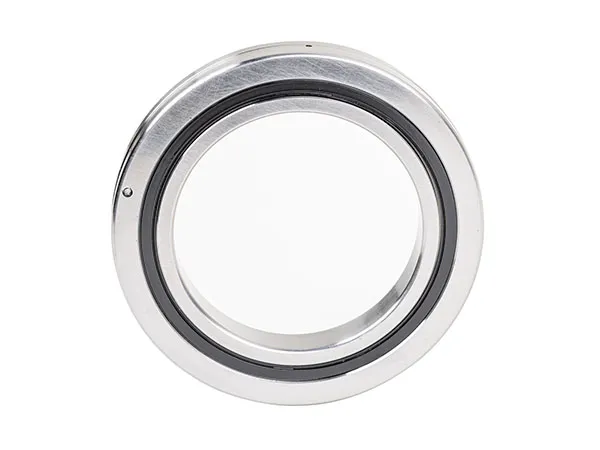
Frictional heat is a natural byproduct of bearing operation, but a significant temperature rise signals trouble. A slewing bearing that feels hot to the touch — typically above 70°C (158°F) — indicates advanced wear, insufficient lubrication, or preload overload. Use an infrared thermometer to measure the outer ring temperature during normal operation.
High heat accelerates lubricant degradation, which in turn accelerates wear in a self-reinforcing cycle. Even if you can temporarily cool the bearing with additional grease, the underlying damage is already done. LYMC’s engineered replacement bearings include optimized internal geometry to reduce frictional heat generation.
When the bearing fails to rotate smoothly — sticking, jerking, or refusing to turn at all — the problem is advanced beyond repair. This can result from complete raceway collapse, cage fracture, or massive contamination jamming the rolling elements. In some cases, the bearing may seize entirely, locking the superstructure in place.
Attempting to operate a seized or jerking bearing risks catastrophic failure, including the entire turntable detaching from the chassis. This is the most urgent sign — immediate replacement is non-negotiable.
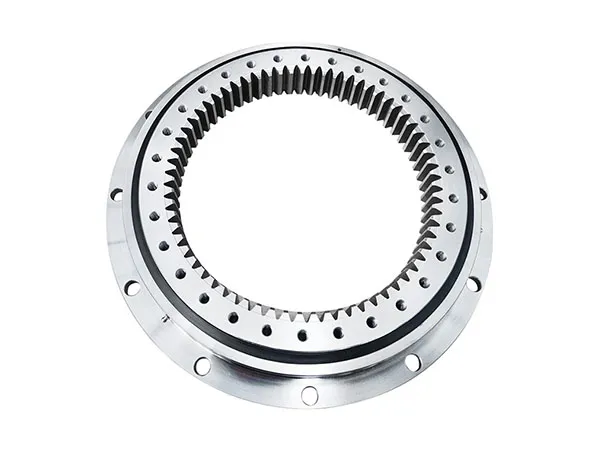
Recognizing these five signs — unusual noise, excessive clearance, visible damage, rising temperature, and rotational failure — enables you to replace your slewing bearing proactively. Waiting until complete failure occurs leads to costly repairs, extended downtime, and potential safety incidents. LYMC specializes in high-quality, custom-engineered slewing bearings for demanding applications worldwide. If you observe any of these warning indicators, contact LYMC’s technical team for a rapid assessment and a replacement solution tailored to your equipment. Protect your investment and your team — replace before it breaks.