- +86 13837949030 +86 15890619536
- info@lymcbearings.com export@lymcbearings.com
- Bearing Zone,Luoxin Industrial Cluster, Luoyang City,Henan Province,China

Time:2026-08-10 03:01:24 Source:LYMC Slewing Bearing
When operating in harsh environments such as extreme temperatures, heavy dust, moisture, or corrosive chemicals, slewing bearings face accelerated wear and premature failure. Extending the service life of these critical components is not only a matter of cost savings but also of operational safety and reliability. This article provides engineering-proven strategies to maximize durability, from material selection and sealing design to lubrication and maintenance practices. With over a decade of industry expertise, LYMC has developed robust solutions tailored for the most demanding conditions.
Harsh environments impose multiple stress factors on slewing bearings simultaneously. Common threats include:
Recognizing these specific challenges is the first step toward selecting appropriate countermeasures. A one-size-fits-all bearing design will likely underperform; customization based on the operating environment is essential.
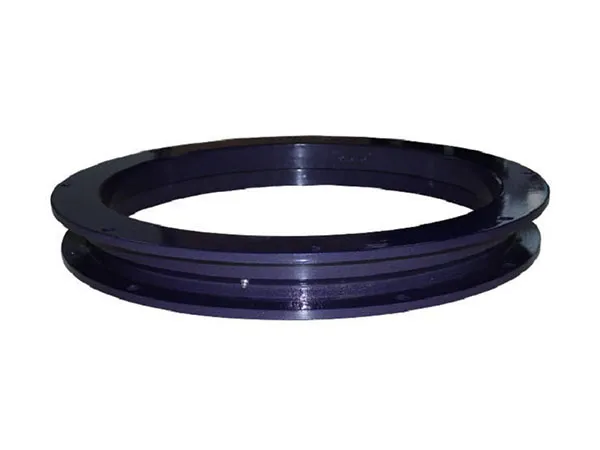
The bearing rings and rolling elements must withstand both contact fatigue and environmental attack. Standard 50Mn or 42CrMo steels can be upgraded to stainless steel variants (e.g., 440C or 17-4PH) for corrosion resistance. For high-temperature applications (above 200°C), LYMC recommends through-hardened or case-carburized steels with appropriate tempering to maintain hardness without brittleness. Additionally, surface treatments such as black oxide coating or zinc-nickel plating provide an extra barrier against rust and chemicals.
By adjusting the induction hardening depth and pattern, LYMC optimizes the hardened layer to resist indentation from hard particles while maintaining core toughness. This balance significantly extends fatigue life in dusty environments like quarries or cement plants.
No bearing can survive long without effective sealing. In harsh environments, standard lip seals often fail due to abrasion or chemical attack. LYMC employs multi-lip labyrinth seals with high-temperature fluoroelastomer (FKM) or polyurethane materials that resist swelling and cracking. For extremely fine dust, a contact seal combined with a wear ring can prevent ingress while maintaining low friction.
Grease must be chosen for the specific temperature range and contamination risk. Lithium-complex greases with extreme-pressure (EP) additives are common, but for high humidity or wash-down, calcium sulfonate complex greases offer superior water resistance. LYMC recommends a regreasing interval reduced by half compared to standard environments, and the use of automatic lubrication systems that regularly purge contaminated grease. Always follow the OEM manual for proper quantities to avoid overheating.
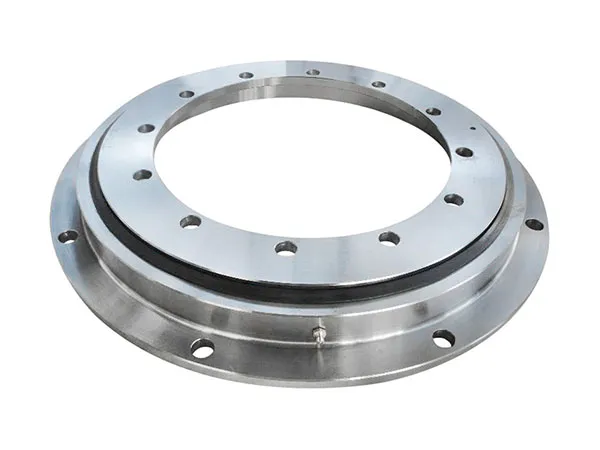
Even the best-designed bearing requires vigilant monitoring. Simple visual inspections for rust, seal damage, or unusual noise should be performed weekly. More advanced techniques include:
LYMC provides a maintenance log template that includes recommended torque checks on mounting bolts (critical for preload retention) and periodic full cleaning/regreasing during scheduled downtime. Proper alignment and bolt torque are often overlooked but account for a significant percentage of premature failures.
With 10 years of specialized manufacturing, LYMC has engineered bearings that consistently outperform generic alternatives in extreme conditions. Here are the key competitive advantages:
Choosing the right partner early in the design phase can save thousands of dollars in unplanned downtime.
We recommend regreasing every 200 operating hours or weekly, whichever is shorter. Use a hand grease gun until fresh grease appears at the seal, and always clean the nipple before connecting.
Standard carbon steel bearings will corrode rapidly. You need stainless steel rings or at least a protective coating. LYMC’s CorroShield series is specifically designed for marine and chemical environments.
Based on field data from mining customers, LYMC bearings last 2–3 times longer than industry average in equivalent abrasive conditions. Exact life depends on load and maintenance, but our engineering team can provide a detailed estimate.
By applying these strategies – proper material selection, robust sealing, correct lubrication, and diligent monitoring – you can dramatically extend the service life of slewing bearings even in the most unforgiving environments. For a customized analysis of your application, contact LYMC’s technical team today.