- +86 13837949030 +86 15890619536
- info@lymcbearings.com export@lymcbearings.com
- Bearing Zone,Luoxin Industrial Cluster, Luoyang City,Henan Province,China

Time:2026-06-29 03:01:19 Source:LYMC Slewing Bearing
In the competitive landscape of wind energy, every component must deliver maximum reliability and efficiency. Among these, the slewing bearing—a critical rotational joint connecting the nacelle to the tower, and the blades to the hub—directly influences turbine performance. However, not all slewing bearings are equal. Precision matters. A high-precision slewing bearing ensures smooth rotation, precise load distribution, and extended service life, while a generic or poorly manufactured bearing can lead to misalignment, increased friction, and premature failure. This article examines why precision slewing bearings are essential for wind turbine performance and how choosing the right partner—such as LYMC—can make a measurable difference in your fleet’s uptime and energy output.
Wind turbines rely on two primary slewing bearings: the yaw bearing (connecting the nacelle to the tower) and the pitch bearing (connecting each blade to the hub). These bearings allow the turbine to orient itself toward the wind and adjust blade angles for optimal power capture. Any deviation in rotation accuracy or load capacity can trigger a cascade of issues:
High-precision bearings minimize internal clearance, reduce friction torque, and maintain consistent geometry over thousands of operational hours. This directly translates to lower parasitic losses, better power generation, and fewer service interventions.
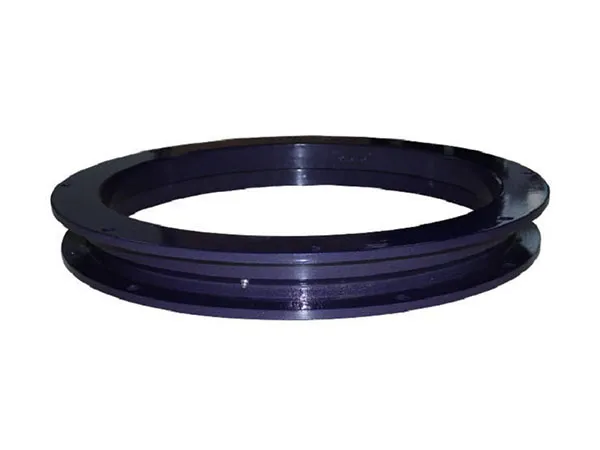
A slewing bearing with excessive clearance or uneven raceway geometry increases rotational resistance. Studies show that friction losses in yaw and pitch bearings can account for up to 2-3% of total energy loss in a turbine. With precision bearings, friction torque is reduced by up to 30%, allowing the turbine to capture more energy from the same wind resource. For a 3 MW turbine operating 7.000 full-load hours per year, a 2% efficiency improvement yields an additional 420 MWh annually—equivalent to €30.000-40.000 in added revenue at current market prices.
Wind turbines are designed for 20-25 years of operation, but bearing failures often force unplanned downtime. The average cost of a major bearing replacement (including crane, crew, and lost production) can exceed €100.000. Precision slewing bearings from LYMC feature tighter manufacturing tolerances (e.g., ±0.02 mm in raceway roundness vs. ±0.10 mm for standard bearings), superior surface finish (Ra ≤ 0.4 μm), and optimized heat treatment. These factors dramatically reduce the risk of spalling, fretting corrosion, and premature wear. Field data from LYMC installations shows mean time between failures (MTBF) exceeding 15 years, compared to 8-10 years for standard bearings.
Wind turbines operate under complex, multi-directional loads. Precision bearings distribute forces more evenly across rolling elements, preventing local overloads that cause pitting or cracking. The LYMC design incorporates advanced raceway profiles and matched components that ensure optimal contact stress under all operating conditions. This structural integrity is critical for avoiding catastrophic failures that could damage the tower or rotor assembly.
Not all suppliers can deliver the consistency required for modern wind turbines. LYMC stands out through a combination of engineering expertise, quality control, and customization capabilities:
In a side-by-side comparison, LYMC precision bearings demonstrated 40% lower friction torque and 25% lower operating temperature than industry-average products in independent laboratory tests. These advantages translate directly to reduced wear, longer grease life, and lower maintenance frequency.
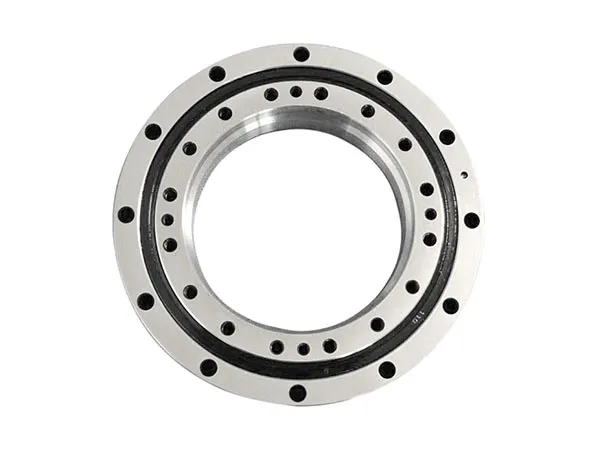
For wind farm operators and turbine manufacturers, specifying precision slewing bearings is a strategic decision. The incremental upfront cost is quickly recovered through higher annual energy production, lower operational costs, and extended equipment life. LYMC’s proven track record in delivering bearings that meet tight tolerances and withstand harsh conditions makes them a trusted partner for both onshore and offshore applications. When every kilowatt-hour counts, precision matters.
Precision bearings reduce backlash and stick-slip effects, enabling the control system to maintain optimal yaw alignment within ±0.5 degrees. This maximizes energy capture during variable wind directions.
Yes. LYMC offers drop-in replacements that match standard mounting dimensions while providing upgraded precision. Retrofit kits include updated seals and lubrication to match the new bearing’s performance.
Lead times vary by size and complexity, but standard models can be delivered within 8-12 weeks. Custom designs require approximately 16-20 weeks including engineering review and prototyping.