- +86 13837949030 +86 15890619536
- info@lymcbearings.com
- Bearing Zone,Luoxin Industrial Cluster, Luoyang City,Henan Province,China

Time:2026-10-26 03:01:29 Source:LYMC Slewing Bearing
Crossed roller bearings sit at the heart of positioning accuracy in CNC machines. A single wrong specification can introduce runout, reduce rigidity, or shorten service life, and the resulting scrap rate often costs far more than the bearing itself. For engineers and purchasing teams, the real challenge is not finding a supplier, but matching bearing type, precision grade, and stiffness to a specific axis, spindle, or rotary table. This guide explains the selection factors that matter most, the trade-offs behind each choice, and how to verify a supplier before committing to volume orders.
Unlike standard ball bearings, a crossed roller bearing arranges cylindrical rollers at 90 degrees to each other, alternating in a single raceway. This layout lets one bearing absorb radial, axial, and moment loads simultaneously, which simplifies the surrounding mechanical design considerably.
For CNC applications the practical benefits are direct:
These characteristics make crossed roller bearings a common choice for rotary tables, indexing heads, robotic joints, tool changers, and the tilt axes of five-axis machines.
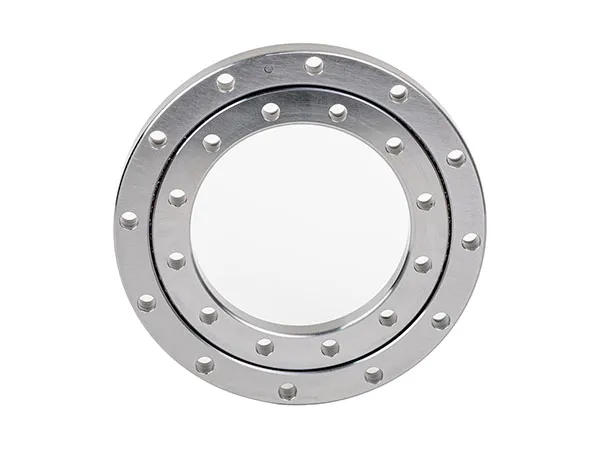
Selection starts with the axis itself, not the catalogue. A high-speed spindle axis and a slow rotary table demand very different bearings, even when their bore sizes match.
Estimate the combined radial, axial, and moment loads, then apply a safety factor that reflects shock and intermittent cutting. Thin-section bearings are sensitive to moment load, so an underestimated overturning moment is one of the most frequent causes of premature failure.
Continuous rotation, oscillating motion, and indexing with frequent starts and stops each stress the raceway differently. Oscillating axes tend to show false brinelling if lubrication is inadequate, while indexing axes place more demand on cage or separator durability.
Match the bearing's running accuracy to the machine's positioning tolerance rather than simply buying the highest grade available. Overspecifying precision adds cost without improving the finished part.
Crossed roller bearings for CNC equipment generally fall into a few practical categories:
As a general rule, caged designs suit spindle and high-speed indexing axes, while full-complement designs suit heavy rotary tables and low-speed joints where stiffness dominates.
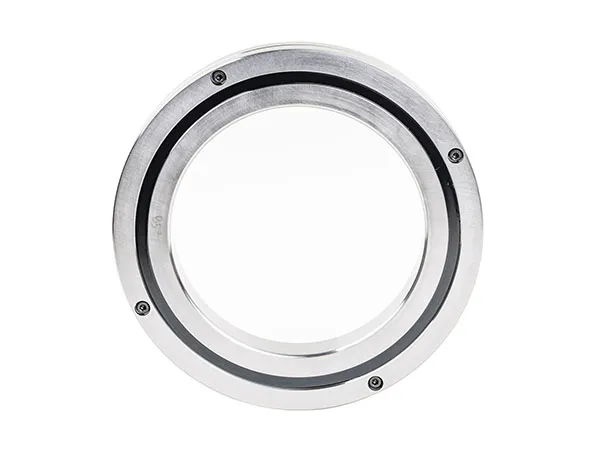
Running accuracy is normally expressed as radial and axial runout tolerances. For CNC positioning axes, tighter runout translates directly into better repeatability, but it also requires a matching housing and shaft tolerance. Precision in the bearing cannot compensate for a poorly machined seat.
Compare basic dynamic and static load ratings, but also review the stiffness curve if the supplier provides one. Two bearings with identical ratings can behave differently under small displacements, and it is the small-displacement behaviour that governs surface finish.
Allowable speed depends on lubrication method, cage design, and preload. Grease lubrication simplifies maintenance, while oil or air-oil systems support higher speed and better heat removal on continuous-duty axes.
Confirm bore and outside diameter tolerances, flange hole patterns, and whether the bearing is intended for a press fit, clearance fit, or clamped mounting. Installation errors are a leading cause of warranty claims, so ask for mounting instructions at the quotation stage.
Bearing steel with proper through-hardening or case-hardening determines fatigue life. Vacuum-degassed steel reduces inclusions and improves reliability under cyclic loading. Roller surface finish and raceway roundness affect noise, friction torque, and vibration, all of which matter on finishing operations where surface quality is critical. When comparing quotations, request material certificates and dimensional inspection reports rather than relying on catalogue values alone.
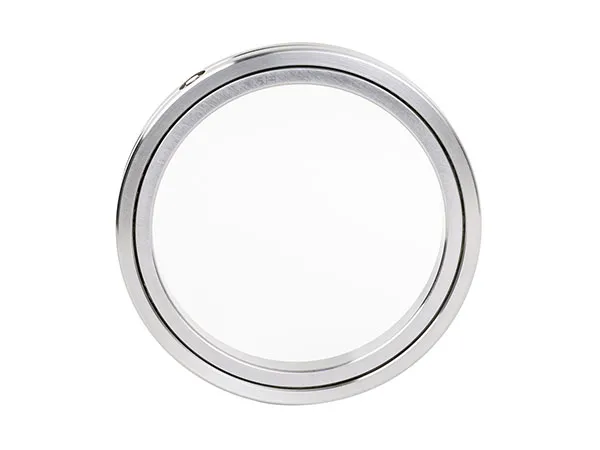
The bearing is only one part of the supply decision. Delivery consistency, technical support, and traceability often matter just as much in production environments.
Suppliers such as LYMC that focus on precision bearing manufacturing can usually provide application-level guidance on preload and fit, which shortens the trial-and-error phase during machine development.
No. Match the grade to the axis tolerance. Higher grades increase cost and demand tighter housing accuracy, so they only pay off where positioning error is genuinely limited by the bearing.
It depends on speed, load, and sealing. Sealed grease-lubricated bearings may run for long intervals, while open bearings on continuous-duty axes need scheduled lubrication. Follow the supplier's recommendation and monitor temperature trends.
In many rotary table and joint designs, yes. The combined load capability often allows a single bearing to replace a radial and thrust pair, reducing assembly complexity.
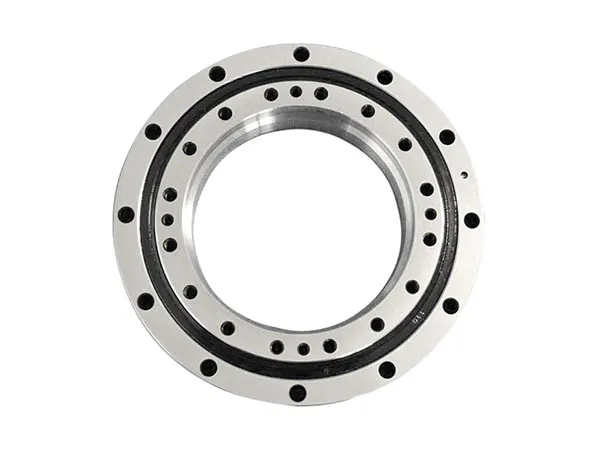
Choosing crossed roller bearings for CNC equipment is a matching exercise: load profile, motion pattern, precision requirement, and mounting conditions all shape the final decision. Start with the axis specification, select the bearing type and grade that satisfy it, and then verify the supplier's inspection and support capability. Getting these steps right protects positioning accuracy, extends service life, and keeps total cost of ownership under control.